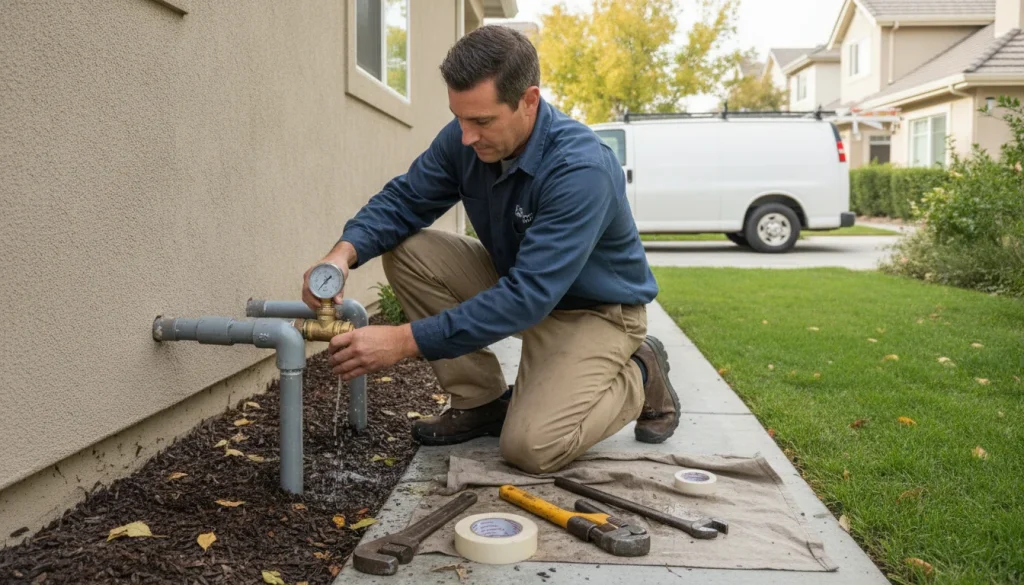
When faucets hiss, bang, or your toilet fill valves chatter, you may be dealing with water pressure too high. In plain terms, high pressure means your home’s static pressure exceeds 80 psi; most houses should sit around 40–60 psi. This guide shows Riverside homeowners how to confirm pressure with a gauge, explains the most common causes, and outlines safe steps to bring levels back under control before pipes, water heaters, and fixtures wear out.
Key Takeaways
- Normal home water pressure is 40–60 psi; above 80 psi is unsafe and can damage plumbing.
- Verify with a screw-on gauge, including an overnight peak reading to catch spikes.
- Frequent culprits include a failing PRV, thermal expansion, municipal surges, or mis-set well controls.
- Fixes range from PRV adjustment or replacement to a properly charged expansion tank and system monitoring.
- Call a licensed plumber if you see 80+ psi, TPR discharge, banging pipes, or repeated leaks.
1. What “high” water pressure means and how to confirm it
In most US homes, normal pressure is 40–60 psi (pounds per square inch). Building codes cap static pressure (with no water running) at 80 psi; anything higher is considered unsafe for your system. Use a pressure gauge—a small, screw-on tool for a hose bib or laundry tap—to confirm:
- Choose a cold outdoor spigot or laundry tap and thread the gauge on hand tight.
- Ensure no water is running indoors and read the static psi.
- Open an indoor faucet to observe drops and any rebound spikes.
- Leave the gauge on overnight. Many have a peak needle—check it in the morning for spikes.
If your static reading hovers near 80 psi or the peak needle records overnight surges above that, the system needs attention. Short surges can happen, but repeated spikes can stress pipes, valves, and appliances. Plumbing Riverside California regularly sees these patterns during seasonal city work and irrigation cycles.
2. Common causes of high water pressure
A pressure-reducing valve (PRV) lowers incoming street pressure to a safe house level. If a PRV is failing, out of adjustment, or missing, whole-house pressure can run too high.
Thermal expansion occurs when heated water takes up more space. In a closed system (with a working check valve or PRV), pressure can climb fast after the water heater fires. An expansion tank absorbs this growth; if it’s missing, undersized, or flat, pressure spikes and noises follow.
Municipal changes matter too. Hydrant testing, line flushing, nighttime demand swings, or elevation differences across Riverside can push pressures higher when few taps are open.
On well systems, the pressure switch controls pump cut-in/cut-out. If those settings are too high or don’t match the pressure tank’s precharge, household pressure can exceed safe limits.
Plumbing Riverside California works across Riverside every week and often finds a combination: a tired PRV plus a waterlogged expansion tank, or street spikes compounded by no visible gauge to warn homeowners.
3. Safe fixes and preventative steps
Basic checks are DIY-friendly, but for anything beyond minor adjustments, use a licensed plumber.
A PRV has an adjustment bolt that changes outlet pressure. Shut water off first, make small turns, and watch the gauge after each change. If the PRV is corroded, drifts, or won’t hold a set point, replacement is safer than forcing it.
An expansion tank must be charged to match cold static pressure. With water pressure relieved, use a tire gauge on the tank’s Schrader valve and add air to match the home’s cold psi. Replace the tank if it’s waterlogged or won’t hold air. Add one if your closed system lacks a tank.
A few long-term protections help:
- Install an easy-to-read whole-home gauge (or two) where you can see them.
- Log morning and evening readings for a week to spot patterns.
- Add hammer arrestors at quick-closing valves to tame banging.
- Use high-quality appliance hoses and inspect them yearly.
On well systems, verify the pressure switch and tank precharge align—common pairs are 30/50 or 40/60, with at least a 20 psi spread to avoid short cycling. If high pressure has aggravated sediment or stirred up debris, consider Drain Cleaning to clear slow drains before the next storm. Because pressure issues often reveal weaknesses in water heaters, schedule Water Heater Repair when you notice rumbling or frequent TPR activity; in older units, Water Heater Installation or water heater replacement may be the safer path.
4. When to call a plumber and what to expect
Call a pro when any red flags appear: 80+ psi readings, a water heater TPR (temperature and pressure relief) valve dripping or opening, banging pipes, or recurring leaks at faucets, toilets, or washing machine hoses. These are all signs of water pressure too high.
A licensed plumber will measure static and dynamic pressure, inspect the PRV, test the expansion tank charge, and check for municipal swings. Expect code-compliant solutions: PRV adjustment or replacement, a correctly sized and charged expansion tank, recommendations for gauges or arrestors, and guidance if well settings need correction. For safety and longevity, ask about water heaters under stress; sustained overpressure can hasten the need for Water Heater Repair or, if the tank is near end-of-life, water heater replacement.
Frequently Asked Questions
How do I know if my pressure is really too high?
Attach a screw-on gauge to a hose bib and read the static pressure with all taps off. If it’s above 80 psi or the gauge’s peak needle shows overnight spikes beyond that, the system is running too high and needs a PRV check or other repair.
Can I just turn down the PRV myself?
You can make small PRV adjustments while watching a gauge. If the valve won’t hold a steady setting, or your changes cause noise or erratic swings, stop and have a licensed plumber size, test, and replace the PRV if needed.
Why does pressure climb after hot showers?
That’s likely thermal expansion. As the water heater runs, heated water grows and raises pressure in a closed system. An expansion tank absorbs that growth; if it’s missing, undersized, or flat, pressure climbs and may trigger the TPR valve to discharge.
Key takeaways
- Normal home pressure is 40–60 psi; above 80 psi is unsafe and hard on plumbing.
- Confirm with a screw-on gauge and review the overnight peak to catch surges.
- Typical causes: failing PRV, thermal expansion, municipal surges, or mis-set well controls.
- Remedies include PRV service or replacement, a properly charged expansion tank, and ongoing monitoring.
- For 80+ psi, TPR discharge, banging pipes, or repeat leaks, call a licensed plumber.
Conclusion
High water pressure shortens the life of pipes, valves, drains, and water heaters. Quick testing and the right fixes keep your Riverside home safe and quiet, and if overpressure has stressed your equipment, services like Water Heater Repair or Drain Cleaning can help restore dependable performance. Plumbing Riverside California is local to Riverside and ready to inspect, test, and provide code-compliant repairs. Contact us.