A sudden high water bill can come from changed water use, a leak, a faulty fixture, or a billing error. Compare it with past bills, then check toilets, faucets, and visible pipes. If water is flowing or damage appears, shut off the affected supply if safe and seek plumbing help in Riverside.
Table of Contents
- Why might your water bill suddenly increase?
- How can you tell if a sudden high water bill points to a leak?
- What should you check first inside your home?
- How can you use your water meter to check for a hidden leak?
- Can a running toilet or water heater cause a high bill?
- When does a high water bill signal a plumbing emergency?
- What should you do after discovering a sudden high water bill?
Why might your water bill suddenly increase?
A higher bill may follow a change in water use, a leak, a faulty fixture, or a billing issue. Compare the current bill with earlier bills, and check the dates and meter readings. A sudden jump does not always mean a pipe has burst, but it does call for a careful check.
Changes in household water use
More people at home, extra laundry, longer showers, or more lawn watering can raise water use. A new appliance or a pool fill can also affect the bill. Think about what changed during the billing period, not just what is happening today.
Some changes are easy to overlook. A guest may use a bathroom that rarely gets used, or the household may run more loads of laundry. If your home has an irrigation system, review its schedule. Check whether it ran during rainy weather or while nobody was home.
Leaks, faulty fixtures, and billing issues
A small leak can run for a long time without making a puddle. Check toilets, outdoor faucets, water heaters, and pipes under sinks. A wrong meter reading or an estimated bill can also look unusual, so review the dates and reading details.
If the meter is easy to reach, compare its display with the bill. The readings may differ because they were taken on different dates. If the bill does not fit your household use, ask the water provider to explain the reading and billing period.
In Riverside, California, weather and seasonal habits can change water use. Residents may water lawns or fill pools more often at certain times. Still, do not assume a large jump is seasonal without checking for leaks. Plumbing Riverside California helps Riverside property owners look into plumbing problems when a fixture or pipe may be wasting water.
How can you tell if a sudden high water bill points to a leak?
A leak is more likely if the meter shows water use while all fixtures are off. Damp areas without a clear cause can also be a clue. Listen for drips or running water, and look for wet surfaces, musty smells, or a toilet that refills by itself. A room can look dry and still have a hidden leak.
Signs of a visible leak
Check under sinks, around toilets, near the water heater, and beside pipes you can see. Look for drops, rust, warped cabinet floors, peeling paint, or water marks. A dripping faucet may waste water over time, while a wet patch near a pipe may point to a larger issue.
Listen when the home is quiet. Hissing, trickling, or running sounds may come from a toilet tank or a pipe behind a wall. Do not open walls or take equipment apart to find a leak. A qualified plumber can trace the source and explain what may need repair.
Clues that water may be leaking behind walls or underground
A warm floor patch, damp wall, or new musty smell may signal hidden water. Outside, a soggy area that stays wet during dry weather may point to a buried water line. A sudden drop in water pressure can happen with a leak, though other plumbing problems can cause it too.
If the ground is wet near a service line, do not dig. Utility lines may be nearby, and the leak may not be on your side of the meter. Note where water appears and whether the area changes. Share what you find with the water provider or a plumber.
A hidden leak can harm wood, drywall, floors, and stored items before it is easy to see. If a stain grows or water reaches electrical equipment, treat the problem as urgent. Shut off the water only if the valve is safe to reach, then get help.
What should you check first inside your home?
Start with common fixtures that can leak quietly: toilets, faucets, showerheads, and water-using appliances. Look for moisture, running sounds, or a steady drip in each area. Most homeowners can do these simple checks safely, and they may help narrow down the cause before a service visit.
Toilets, faucets, and appliances
Listen near each toilet after it finishes flushing. If the tank keeps filling or water moves into the bowl without a flush, the toilet may be leaking. A dye check can help: put a few drops of food coloring in the tank, wait without flushing, and see if color reaches the bowl.
Look under sinks and around toilet bases for damp spots. Check washing machine hoses, dishwasher connections, and refrigerator water lines if your home has them. Do not pull out a heavy appliance or touch wet electrical parts. Stop if a check feels unsafe or needs tools you do not know how to use.
A faucet aerator is a small screen at the end of the faucet. Dirt can collect there and reduce flow, but low pressure may have other causes. You can clean an aerator if it comes off easily and the fixture is in good shape. If several fixtures have low pressure, especially with a new high bill, a pipe leak or supply issue may need expert care.
Outdoor faucets, irrigation, and pools
Check outdoor faucets for drips and make sure hoses are not left running. Look at visible sprinkler heads and valves for water spraying the wrong way or pooling on the ground. A stuck sprinkler valve can keep water flowing when the system should be off.
Pools and water features may need water added, but unusual water loss deserves a closer look. Check for leaks around the equipment and review any automatic fill system. Do not adjust buried irrigation pipes or pool plumbing if the work requires digging or electrical changes.
If you know the controls, you can safely pause an irrigation schedule for a short check. If the meter still shows water use after indoor and outdoor fixtures are off, keep checking rather than assuming the bill is seasonal.
How can you use your water meter to check for a hidden leak?
A water meter test can show whether water is flowing when the home should not be using any. Turn off faucets, appliances, irrigation, and other water uses, then watch the meter. Movement suggests water is passing through it, but the test cannot show where a leak is or prove what caused it.
Prepare for a meter test
Pick a time when nobody needs water for a short while. Make sure dishwashers, washing machines, ice makers, and irrigation are not running. Tell everyone at home not to flush toilets or use faucets during the check.
Find the meter and note its reading or flow indicator. Meter locations differ, and covers can be heavy or hard to open. Do not enter a small enclosed space or handle a meter that looks damaged. If you cannot reach it safely, ask the water provider what to do.
Wait briefly, then see whether the display has changed or its flow indicator is moving. If it has, shut off the home’s main water valve only if it is safe and you know how to use it. Check the meter again. The new result may help show whether the issue is inside the home or beyond that valve.
Understand what a meter reading can and cannot confirm
A moving meter is a useful clue, not a full answer. It cannot locate a pipe, explain a faulty fixture, or prove that the meter is accurate. Some systems use small amounts of water on their own, so check that household equipment is not running.
If the meter stays still, that does not rule out every leak. A leak that starts and stops may pause during the test. A leak after the meter usually shows as water use. Note the time and readings, then compare them with the bill and any later checks.
Do not force a stuck shutoff valve or remove a meter cover that seems unsafe. A damaged valve can make the leak worse. A plumber can test the plumbing and help find a hidden leak rather than guessing from the bill alone.
Can a running toilet or water heater cause a high bill?
Yes. A running toilet can let water pass from its tank into the bowl without a normal flush. A leaking water heater can waste water or harm nearby surfaces. Check both when a bill rises without warning, but do not take apart gas or electrical equipment.
Common fixture and appliance problems
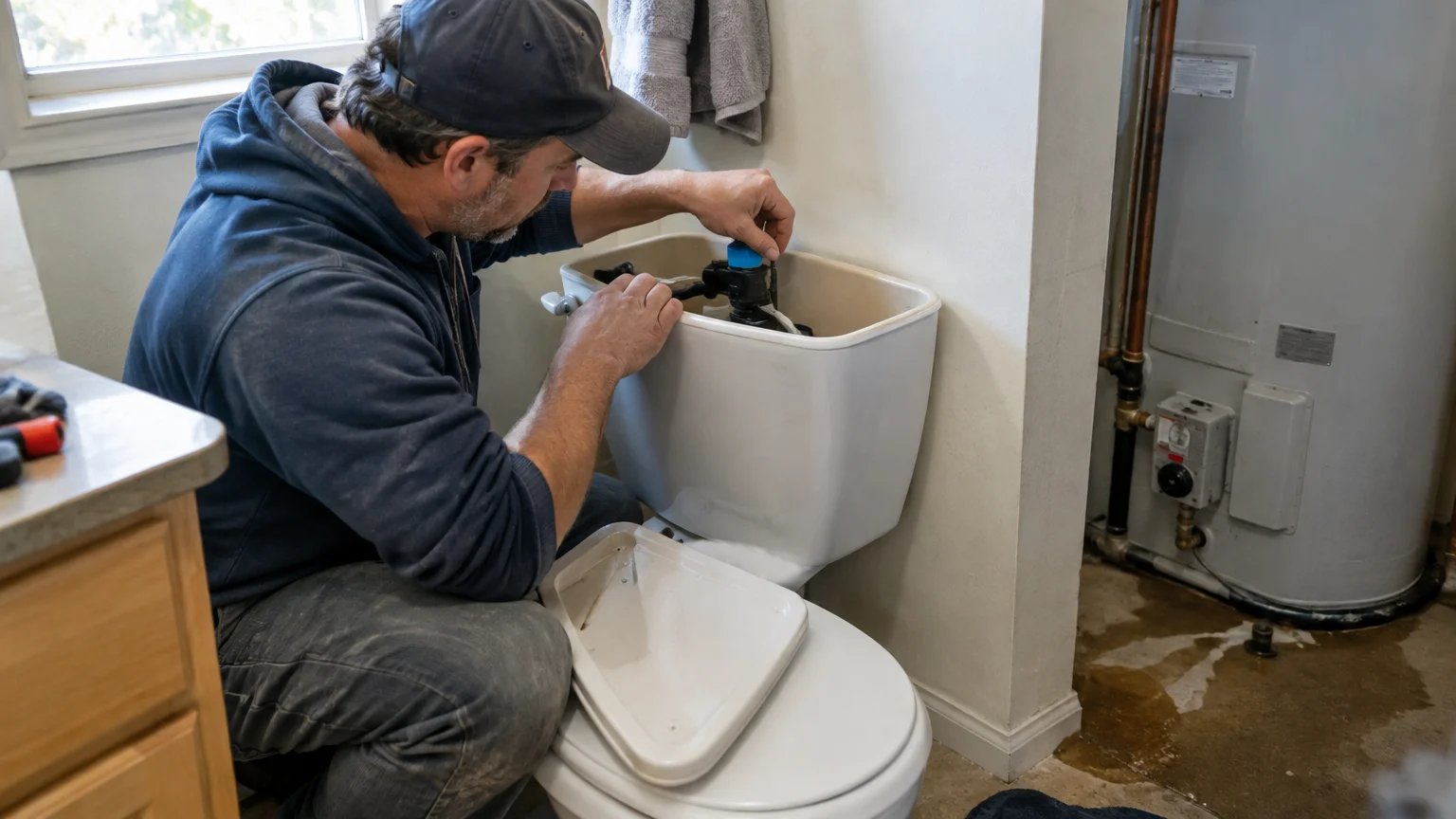
Toilets may keep running when a flapper does not seal, a fill valve sticks, or the water level is too high. A homeowner can look inside the tank and see whether parts move freely. If a simple adjustment does not stop the flow, Toilet Repair may help find and fix the problem.
Faucets and showerheads can drip when a washer or cartridge wears out. You may clean an aerator that comes off easily or tighten a loose handle if the task is simple and safe. Ongoing drips, water under a fixture, or a sudden pressure change needs a closer look.
Dishwashers, washing machines, and refrigerator lines may leak at a hose or connection. Look for moisture while the appliance is off, but do not touch a wet plug or move a heavy machine alone. If a hose is split or water is spreading, close the nearest safe shutoff valve and get help.
Water heater leaks and unexpected discharge
Water near the bottom of a water heater may come from the tank, a pipe connection, or a drain valve. It could also come from a discharge pipe releasing water due to a pressure or heat concern. The source matters, so do not treat every puddle as a harmless drip.
If the heater leaks from the bottom, keep people away from hot water and wet electrical parts. Turn off its water supply only if the valve is easy to reach safely. Gas and electrical controls can be dangerous, so do not remove covers or try a repair yourself.
A water heater that leaks, makes strange sounds, or stops providing hot water needs prompt attention. Water Heater Repair may fix a faulty unit, while Water Heater Installation may suit a unit that cannot be repaired. Water heater replacement should also follow local rules and the maker’s instructions. Tankless water heaters need proper sizing, venting, and setup.
When does a high water bill signal a plumbing emergency?
A high bill signals an emergency when water is damaging the property, cannot be stopped, or creates an immediate safety risk. A burst pipe, fast-growing leak, sewage backup, or water near electrical equipment needs urgent care. A bill alone, with no active damage or danger, usually calls for a careful check rather than panic.
Warning signs that call for urgent action
Treat these signs seriously:
- Water pours from a pipe, ceiling, or fixture and will not stop.
- A ceiling bulges, a wall gets soaked, or flooring starts to buckle.
- Sewage backs up into a tub, sink, toilet, or floor drain.
- Water reaches outlets, electrical appliances, or a breaker panel.
- A strong gas smell or hissing sound may point to a gas leak.
A gas leak is not a water leak and needs different safety steps. If you suspect gas, do not use flames, switches, or appliances. Leave the building and move away. Contact emergency services or the gas utility from a safe place. Do not try to test for a gas leak yourself.
For a major water leak, use the main shutoff only if it is safe and you know where it is. If water is near electrical equipment, do not step into it or touch switches. Emergency Plumbing can help with urgent leaks, backed-up drains, and other active plumbing problems.
Steps to limit water damage while waiting for help
Move people and pets away from the wet area. If safe, put a bucket under a small drip and move belongings away from wet floors. Do not stand under a sagging ceiling or touch wet electrical devices. Take photos from a safe spot to record visible damage.
If the water shutoff is safe to reach, turn it off and tell others in the building. For a leak near one fixture, its own shutoff may stop the flow without turning off water throughout the property. Do not force a stuck valve; it could break and make the emergency worse.
Plumbing Riverside California helps homeowners and businesses with urgent plumbing problems in Riverside. A plumber can check the source, explain the needed repair, and help limit more water damage. Do not wait for the next bill if water is still flowing or the property is unsafe.
What should you do after discovering a sudden high water bill?
First, compare the bill with past use and check the dates and readings. Then inspect visible fixtures, test the meter if it is safe, and write down what you find. If there is an active leak, damage, or danger, stop using the affected fixture and seek urgent plumbing help.
Document the bill, meter readings, and suspected problem
Keep the bill and note its start and end dates, meter readings, and whether the reading was actual or estimated. Write down the current meter display, with the time and date. Take photos of damp spots, dripping fixtures, or meter changes, but stay away from unsafe areas.
Make a short list of recent changes, such as visitors, extra laundry, irrigation, or a new appliance. This can help separate a real increase in water use from a leak or billing issue. If the reading does not make sense, ask the water provider to review it and explain how it checks the meter.
Do not assume the provider or plumber can see the clues you noticed. Explain when a sound began, which fixtures you checked, and whether the meter moved with water turned off. These details can help make the next check more focused. If slow drains or a backup are also present, drain cleaning may address that separate problem, but it will not explain a high water reading on its own.
Key takeaways
- A sudden high water bill may come from changed water use, a leak, or a reading issue.
- Check toilets, faucets, appliances, outdoor taps, and irrigation first.
- A meter test can show water flow but cannot locate or diagnose a leak.
- Water near a heater, active pipe damage, or sewage backup needs prompt attention.
- Avoid DIY work on gas, electrical, hidden, or unsafe plumbing systems.
Frequently Asked Questions
What causes a sudden high water bill when nothing changed?
A hidden leak, running toilet, faulty appliance hose, or wrong meter reading can raise a bill even when habits seem the same. Check fixtures and compare the meter with the bill. If the meter moves while water is off, ask the water provider or a plumber to help investigate.
How can a homeowner check for a hidden water leak?
Turn off water-using fixtures and appliances, then watch the meter for movement. Also look for damp spots, stains, musty smells, or toilets that refill without being flushed. The test can suggest water is flowing, but a plumber may need to find a hidden pipe leak.
Can a running toilet cause a high water bill?
Yes. Water can leak from the tank into the bowl without making much noise. Listen for the tank refilling and check whether water moves in the bowl when nobody uses the toilet. A dye check can show a tank leak, but ongoing running may need repair.
What should someone do if a water heater is leaking from the bottom?
Keep people away from hot water and wet electrical parts. If its water shutoff is easy to reach safely, turn it off, but do not remove covers or handle gas or electrical controls. A plumber can check whether the leak comes from the tank, a connection, or a discharge line.
When should a high water bill be treated as an emergency?
Treat it as urgent when water is spreading, a pipe has burst, sewage backs up, or water reaches electrical equipment. Shut off water only if the valve is safe to use. If you suspect gas, leave the building and contact emergency services or the gas utility from a safe place.
Conclusion
A high bill is a warning, but it does not point to one cause by itself. Check household use, inspect easy-to-reach fixtures, and record meter readings. For active leaks, water damage, or a problem you cannot safely identify, Contact us to get help from Plumbing Riverside California.
If you are not sure what you are dealing with, it is worth having someone look at it before it turns into a bigger job. Find out more about our emergency plumbing in Riverside, California. Get in touch with Plumbing Riverside California in Riverside, California today and we will tell you where you stand.