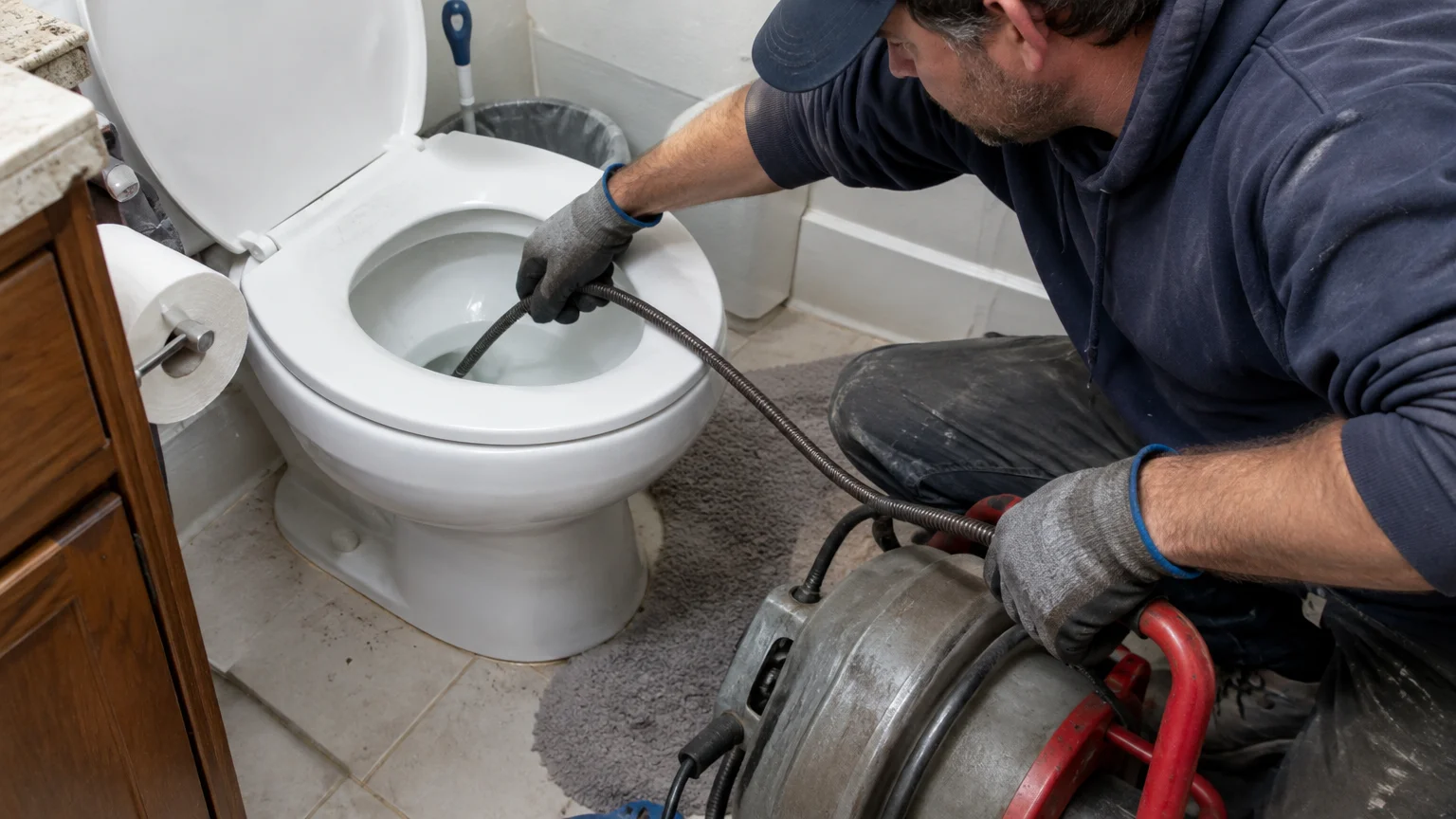
A plumbing snake is a long, bendable metal cable that reaches into a drain to work on a clog. It has a small tip at one end and a handle, crank, or motor at the other. Its shape changes based on the drain it is made for, such as a sink, toilet, or larger pipe.
The tool may look simple, but each part has a job. Knowing what does a plumbing snake look like can help you choose a safer tool and spot when a clog needs expert help. Plumbing Riverside California helps property owners in Riverside understand drain problems and consider a sensible next step.
Table of Contents
- What does a plumbing snake look like?
- What are the main parts of a plumbing snake?
- What does a hand-crank plumbing snake look like?
- What does a toilet auger look like?
- What does a powered drain snake look like?
- What do different plumbing snake tips look like?
- How can you tell a plumbing snake from other drain tools?
- What size plumbing snake should you use for a drain?
- How do you use a plumbing snake safely?
- When should you call a plumber instead of using a snake?
- Key takeaways
- Frequently Asked Questions
- Conclusion
What does a plumbing snake look like?
A plumbing snake often looks like a long, coiled metal cable with a handle or drum at one end. Its tip is made to loosen, break up, or catch a clog. Small hand models may fit in one hand, while powered models may sit in a drum or on a frame.
The cable, tip, and handle or drum
The cable is the long, flexible part that goes into the drain. It may look like a tight spring or a narrow metal coil. Its flexible form helps it move through bends in many drainpipes. The tip is at the front and meets the clog first.
Small hand tools usually have a grip and crank at the other end. Larger tools may store the cable in a round drum. Powered models have a motor and controls. These parts help the user feed and turn the cable without holding its full length.
How its appearance changes by model
A small sink snake may fit in a drawer and have a basic hand crank. A toilet auger has a curved guide tube and a sleeve that helps protect the bowl. A larger drain machine may have a heavy base, a cable drum, and a foot switch.
A tool’s size does not show that it is right for a clog. A long cable can reach farther, but it may be hard to control in a small fixture. A small cable may not be strong enough for a deep or tough blockage. The drain, pipe, and clog location all matter.
What are the main parts of a plumbing snake?
Most plumbing snakes have a flexible cable, a working head, and a way to guide or turn the cable. The exact design depends on the model. Hand tools use a crank or grip, while powered tools use a motor and feed controls.
Flexible cable and cutting or retrieval head
The cable carries the tool through the drain. It bends as it follows the pipe, but it also needs enough strength to work against a clog. A cable that is too thick or stiff may scrape or harm some pipes. Follow the maker’s directions for the pipe and fixture.
The head is the small part at the cable’s end. Some heads are rounded and move through soft buildup. Others have a hook or cutting edge to catch hair or work on certain clogs. A retrieval head is shaped to bring material back out instead of pushing it farther into the line.
Crank, handle, drum, and power-feed components
On a hand model, the handle turns the cable. A locking knob or clamp may hold the cable while the user feeds it. A drum model stores the cable inside a round case. This helps keep the cable together when the tool is not in use.
Powered models may have a motor, foot switch, and control for moving the cable forward or back. These parts can make the tool easier to run, but they also make it more powerful. A powered snake can twist fast if its head catches. A larger machine is not always the safer or better choice.
What does a hand-crank plumbing snake look like?
A hand-crank plumbing snake is a small tool with a coiled cable, a grip, and a turning handle. Many are made for smaller home drains. The cable may sit in a small drum or coil around a simple frame. A narrow tip at the front goes into the drain.
Typical size and shape of a household hand auger
A household hand auger often looks like a short cable tool with a pistol-shaped handle or a small crank frame. The cable comes out through a guide at the front. Some models have a drum that holds most of the cable, while others have an open coil.
The tool may work on a simple clog near a sink or tub, if the maker says it suits that drain. A homeowner may also use a small plastic drain tool to pull hair from near a stopper. This is not the same as a metal snake, and it should not go far into a pipe.
How the crank feeds and turns the cable
The crank turns the cable so its tip can work against a blockage. Feed the cable in small amounts while keeping a firm hold on the handle. If the cable meets resistance, it could be touching a clog, a pipe bend, or a fitting. Resistance alone does not tell you which one.
A hand snake should not be forced through every blockage. If it will not move with gentle pressure, stop and check the tool instructions. Forcing it can kink the cable or harm the drain. Plumbing Riverside California can assess a clog when careful, basic steps do not clear it.
What does a toilet auger look like?
A toilet auger has a short, curved guide tube that rests near the toilet bowl. A metal cable runs through the tube and ends in a small tip. Many models have a protective sleeve, so the cable does not rub right against the porcelain.
Protective sleeve and curved guide tube
The curved guide aims the cable through the toilet’s built-in trap. The trap is the curved passage inside the toilet that holds water and keeps sewer odors out of the room. A sleeve covers the area near the bowl and helps guard its surface from scratches.
The handle or crank sits at the top or back of the tool. Turning it moves the cable through the toilet trap. The short, shaped body makes a toilet auger look different from a straight sink snake. It is made for toilet clogs, not every drain in a home.
How it differs from a general drain snake
A general drain snake may have a longer, exposed cable and a narrow head. Depending on its size and design, it may suit a sink, tub, or another drain. A toilet auger has a guide that helps it follow the toilet’s path and protect the bowl.
Using the wrong tool can cause damage. A bare metal cable may scratch porcelain, while a large cable may not fit through a small opening. Do not use a powered drain machine in a toilet unless it is made for that job and you know how to run it safely.
What does a powered drain snake look like?
A powered drain snake usually has a motor, cable, and control system. Some models hold the cable inside a drum. Others have a frame with the motor and some cable left open. Many have a foot switch that lets the user control the motor while holding the cable.
Drum-style machines and exposed-cable machines
A drum-style machine looks like a motor with a round case for the cable. The drum turns as the motor runs, keeping much of the cable inside. This can limit loose cable around the work area, but users still need to guide the cable and watch it closely.
An exposed-cable machine has a motor and a cable that feeds out in the open. The frame may have wheels or a stand. These machines can work on larger drains than small hand snakes, but the cable can whip or twist if it catches. The operator needs training and safety gear.
Foot switch, motor, and cable-feed controls
The foot switch starts or stops the motor. A feed control moves the cable forward or back. Some tools also have a clutch or another control to manage the motor. These parts help a trained user work with the cable, but they do not remove the risk of injury or pipe damage.
Powered machines are often used for larger lines or hard clogs. They may be a poor choice for an unknown pipe, a weak line, or someone without training. A motor can hide the feel of a clog until the cable catches or pushes too hard. When in doubt, leave the work to a plumber.
What do different plumbing snake tips look like?
Snake tips come in different shapes because clogs need different approaches. A rounded tip may move through a line, while a hook can catch some debris. A cutter head may scrape or cut certain buildup. Read the tool maker’s guide to learn which head suits the job.
Bulb, arrow, and cutter heads
A bulb head is rounded, like a small ball or loop. It can help guide the cable through a drain or work against soft material. An arrow-shaped head has a pointed form that may help it move into a clog. A cutter head has a wider edge or blade-like shape for scraping or cutting some buildup.
These heads do not suit every drain. The wrong tip may get stuck, push debris farther into a line, or harm the pipe. A cutting head can be risky in a pipe with damage or a weak wall. Do not pick a tip based only on how the clog looks.
Retrieval and specialized attachments
A retrieval head may look like a hook or small corkscrew. It is made to catch things such as hair so they can be pulled back out. Special heads may suit certain materials or pipe types. Some can look alike, so check the tool label.
A snake cannot safely retrieve every object. A hard item may be beyond the tool’s reach or become more stuck if pulled the wrong way. If a toy, cloth, or other solid item has gone down the drain, stop using the fixture. Ask a plumber to check it rather than pushing the object farther in.
How can you tell a plumbing snake from other drain tools?
A plumbing snake has a flexible cable that enters the pipe and reaches a clog. Other drain tools work in other ways. A plunger uses pressure, a drain brush scrubs an area you can reach, and a camera looks inside a line without clearing it.
Drain snakes compared with plungers and drain brushes
A plunger has a rubber cup on a handle. It uses pressure to move a blockage near the fixture. It does not have a long cable that travels inside the pipe. A plunger may help with a simple clog, but it may not reach a blockage farther along the drain.
A drain brush has bristles on a narrow handle. It can clean areas you can reach, such as buildup near a stopper. It is not made to travel deep into a pipe. Homeowners can often remove and clean a stopper if they can do so safely and follow the fixture directions.
How snakes differ from cameras and hydro-jetting equipment
A drain camera has a small lens on a cable. It helps a plumber see inside a drain and find a problem. It does not usually clear the clog by itself. A camera can help show whether the issue is buildup, a foreign object, or a damaged pipe.
Hydro-jetting equipment sends water through a hose at high pressure to clean pipes that can handle it. It differs from a snake, which uses a cable and head. High-pressure cleaning is not right for every pipe. A trained professional should check the pipe’s age, material, and condition first.
What size plumbing snake should you use for a drain?
The right snake depends on the fixture, pipe, and likely clog location. A small cable may fit a sink drain, while a toilet needs a toilet auger. Larger or deeper lines may need professional tools. The longest or thickest tool is not always the best choice.
Matching cable length and thickness to the fixture
The cable must fit through the drain opening and move through its bends. A thin cable may be easier to guide in a small drain, but it may not be strong enough for a hard blockage. A thick cable can be harder to control and may not fit a tight pipe or fixture.
Cable length matters, too. A short tool may not reach a blockage farther down the line. A long cable can reach farther, but it may be harder to handle and store. Check the tool label for the types of drains it is made for. Do not use it beyond the maker’s limits.
Why pipe material and blockage location matter
The pipe material affects how you should use a cable. Old, rusty, cracked, or weak pipes may not handle much force. A clog near a sink opening differs from a blockage in a buried sewer line. You may not be able to see the pipe’s condition from the fixture.
A clog in one sink may point to a local problem. Several slow drains or toilets that gurgle may show a wider issue. Repeated use of a small snake may not reach or fix the cause. Drain Cleaning may help with buildup, while a plumber can check for pipe or sewer trouble. These details also shape plumbing costs, but a quote confirms the final cost after the work is understood.
How do you use a plumbing snake safely?
Use a plumbing snake only when its instructions match the drain and you can control it. Feed the cable gently, turn it as directed, and pull it back slowly. Stop if it catches, the pipe seems damaged, or the clog does not respond to careful use.
Basic steps for feeding, turning, and withdrawing the cable
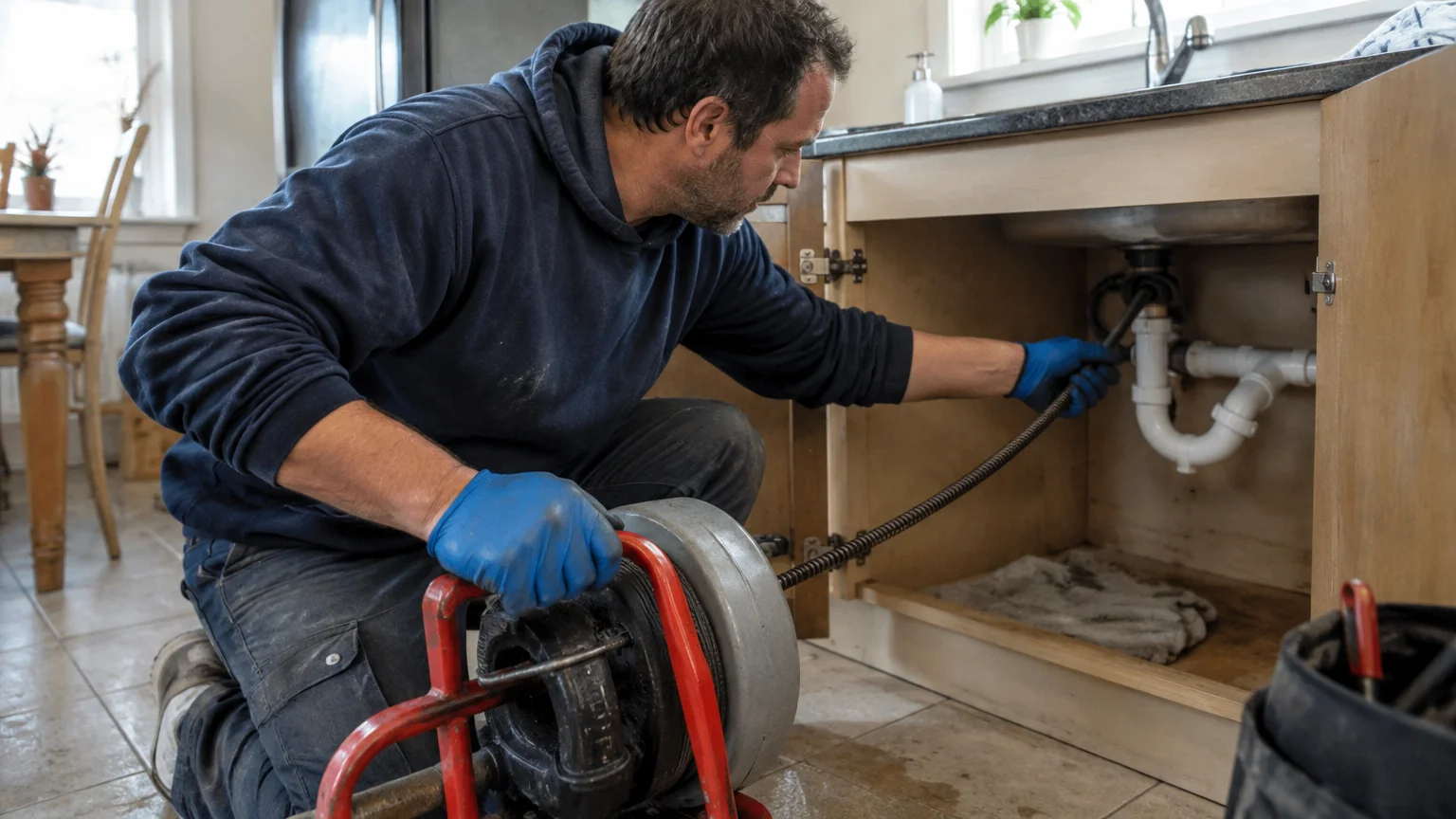
For a small hand snake, read the tool instructions first and clear the work area. Wear gloves and eye protection. Remove a stopper only if you can do so safely. Keep the cable away from loose clothes, hair, and anything that could catch.
- Place the tool’s tip in the drain without forcing it.
- Feed the cable in small amounts and turn the handle as directed.
- Pause if the resistance changes, and do not push hard.
- Pull the cable out slowly while controlling the exposed length.
- Clean the tool and test the fixture gently when finished.
Steps may vary by model, so follow the maker’s directions. Never run a powered snake if you do not know its controls. Do not mix drain chemicals with snaking. Chemical cleaners can splash, burn skin, or react with other products.
Safety precautions and signs to stop
Keep your hands clear of moving parts. Do not grab a powered cable while it turns. Turn off or unplug a machine before making changes. Wear gloves and eye protection, and keep children and pets away from the work area. Stop if the cable kinks, binds, or starts to twist.
Stop if water backs up in other fixtures, sewage appears, or the drain stays blocked after a careful try. A strong chemical smell, a damaged pipe, or a tool stuck in the line also means you should get help. You do not need a professional for simple checks and reachable cleaning. Leave risky or unclear drain work to a plumber.
When should you call a plumber instead of using a snake?
Call a plumber when a blockage keeps coming back, affects more than one fixture, or comes with sewage or signs of pipe damage. These problems may be deeper than a household tool can reach. A plumber can inspect the line, choose suitable equipment, and help avoid making the damage worse.
Recurring or multiple-drain blockages
A clog that returns soon after clearing may have a cause still in the pipe. Grease, scale, roots, or a pipe fault may need more than a quick pass with a small snake. Forcing a cable again and again can harm a drain or push the blockage farther along.
Several slow fixtures at once may point to a shared drain or sewer line issue. Gurgling, water rising in another fixture, or a bad smell can also show a problem beyond one sink. Drain Cleaning may be part of the fix, but the line should be checked if these signs return. For urgent backups or major leaks, emergency plumbing help may be needed.
Sewage backups, suspected pipe damage, and difficult access
Sewage in a tub, floor drain, or toilet is a reason to stop using affected fixtures and seek prompt plumbing help. Do not touch dirty water, and keep children and pets away. A plumber can look for a sewer blockage and advise you on safe cleanup.
Cracks, leaks, soft flooring, or a cable that catches again and again may point to pipe damage. A blockage in a buried line or hard-to-reach area also needs proper tools and training. Plumbing Riverside California serves the main Riverside area, from Downtown and Magnolia Center to Arlington, La Sierra, Canyon Crest, Orangecrest, and nearby neighborhoods. If a clog keeps returning, sewage backs up, or you suspect pipe trouble, Contact us to arrange professional help.
Key takeaways
- A plumbing snake has a flexible cable, a working tip, and a handle or motor.
- A toilet auger has a curved guide and a cover that helps protect the bowl.
- The right tool depends on the fixture, pipe, and clog location.
- Homeowners can handle simple, reachable cleaning but should not force a cable.
- Recurring clogs, sewage, and signs of pipe damage need a plumber’s check.
Frequently Asked Questions
Can a plumbing snake damage a pipe?
Yes. A snake can harm a pipe if it is too large, used with too much force, or pushed through a weak or damaged line. Follow the tool instructions and stop if the cable binds. A plumber should check old or weak pipes before forceful cleaning.
Is a toilet auger the same as a drain snake?
A toilet auger is a kind of plumbing snake, but it has a curved guide to help it pass through a toilet trap. It often has a sleeve to protect the bowl. A general drain snake may not have these parts and could scratch porcelain if used in a toilet.
Can a plumbing snake clear every clog?
No. A snake may clear some clogs, but it may not fix a broken pipe, a deep sewer blockage, or a solid object stuck in the line. If the blockage returns, affects several fixtures, or causes sewage to back up, stop and ask a plumber to inspect it.
Should a homeowner use a powered drain snake?
A homeowner should use a powered snake only if it is made for the drain and they know how to control it safely. The motor can twist or pull the cable with force. For an unknown pipe, a hard clog, or a large machine, professional help is safer.
What is the difference between a snake and a drain camera?
A snake uses a cable and tip to reach or work against a clog. A drain camera has a lens that helps show what is inside the pipe. A camera can find a problem, but it does not usually clear it. A plumber may use both tools when needed.
Conclusion
A plumbing snake may be a hand tool, a toilet auger, or a powered machine. Each kind has a cable, a working head, and parts that guide or turn it. Choose a tool that fits the fixture and pipe, then use it without force.
Simple cleaning near a drain opening may be safe for a homeowner. Recurring clogs, several slow drains, sewage, or signs of pipe damage are different. Plumbing Riverside California can help property owners understand the problem and choose what to do next.
If you are unsure what is wrong, getting advice before trying more tools can help prevent damage. Contact us to speak with Plumbing Riverside California about a drain concern.