What counts as a plumbing emergency? It is a sudden plumbing problem that threatens people, property, or safe use of a building. Burst pipes, spreading leaks, sewage backups, dangerous water heaters, and major overflows need fast action. This guide helps Riverside property owners protect people and limit damage before emergency plumbing help arrives.
A plumbing crisis can feel upsetting, especially when water moves through floors, walls, or ceilings. Stay calm, stop the water when safe, and keep away from electrical or sewage hazards. Plumbing Riverside California helps property owners understand urgent plumbing repair needs and choose a safe next step.
Table of Contents
- What counts as a plumbing emergency?
- Which plumbing problems require immediate attention?
- What should you do first during a plumbing emergency?
- When is a blocked drain an emergency?
- Is a water heater problem considered a plumbing emergency?
- When should you call an emergency plumber?
- How can you prepare for future plumbing emergencies?
- Frequently Asked Questions
What counts as a plumbing emergency?
A plumbing emergency puts people, property, or normal building use at risk. The issue needs quick help when water cannot be controlled, sewage enters the building, or a failed system creates another serious danger.
How much water is escaping or spreading?
The amount and location of the water both matter. A small drip under a sink may wait if a shutoff valve stops it. A steady stream from a broken supply line can spread fast and harm floors, drywall, cabinets, and belongings.
Water near outlets, appliances, panels, or light fixtures can cause an electrical danger. Stay away from wet electrical areas and leave if the risk is serious. The local fire department or utility provider may need to handle hazards outside a plumber’s work.
Could the problem cause immediate property damage or health risks?
A plumbing issue becomes urgent when waiting could make damage or exposure worse. Sewage can contain harmful germs, so people should not touch it without proper protection. A leak inside a wall may also harm wood and insulation before stains appear.
Homeowners, tenants, and property managers should think about nearby rooms and other units. In a building, one broken pipe can affect several spaces. A licensed plumber can find the source, stop the flow, and plan a safe plumbing repair.
Which plumbing problems require immediate attention?
Burst pipes, large leaks, sewage backups, and uncontrolled overflows usually need immediate plumbing help. The concern is not only the fixture itself. Water or waste may spread through the property in a short time.
Burst pipes, major leaks, and flooding
A burst pipe can release water behind walls, under floors, or above ceilings. Signs include rushing water, sudden pressure loss, wet spots, bulging drywall, stains, or water far from a fixture. Close the main water shutoff if you can reach it safely.
Major leaks from toilets, sinks, washing machines, or water heaters also need quick attention. Put containers under a small, controlled leak, but do not enter unsafe areas. Never remove panels from electrical equipment. Water damage may continue after the visible flow slows.
Burst pipes can require fast action, especially when the break is hidden. In Riverside, warm weather does not remove the risk of sudden pipe failure. Aging pipes, poor connections, and ground movement can still lead to leaks.
Overflowing toilets, sewage backups, and severe drain blockages
Stop an overflowing toilet at once. The toilet shutoff valve is often near the wall or floor behind the fixture. If the bowl contains sewage, keep children and pets away, avoid contact, and do not flush again.
Sewage in a tub, floor drain, or sink points to a deeper blockage. A severe backup may affect more than one fixture. Toilet Repair can help with running toilets, leaks, clogs, and flush problems. A larger backup may need urgent drain work and a full line check.
What should you do first during a plumbing emergency?
The first steps are to protect people, stop the water when safe, and limit damage. A homeowner should not take apart a pressurized pipe, enter dirty water, or work near wet electrical equipment.
How to shut off the water supply safely
For a fixture leak, turn the small shutoff valve clockwise until it stops. For a larger leak, close the home’s main water valve. It may be near the water meter, where the service line enters the building, or inside a utility area.
Some homes have more than one shutoff. Tenants should ask the property manager where the main valve is located. Businesses and multi-unit properties may need a building manager to close the correct valve without stopping water to other areas.
If the valve will not move, do not force it. A stuck valve can break and release more water. A plumber can handle the valve and repair the damaged section safely.
How to limit damage before the plumber arrives
Move furniture, boxes, and electronics away from water when safe. Use towels or containers for a small clean-water leak. Do not use a household vacuum near outlets or appliances.
Take clear photos of the affected areas for the owner and insurer. Note when the issue began, which fixtures are affected, and whether the main valve was closed. These details help the plumber prepare for urgent service in Riverside.
When is a blocked drain an emergency?
A blocked drain is an emergency when wastewater backs up, several fixtures stop draining, or water threatens the building. A single slow sink may allow time for routine service. Repeated backups can point to a deeper line problem.
Warning signs of a serious blockage
Watch for these signs of a major drain issue:
- Sewage or dirty water rises from a tub, floor drain, or toilet.
- Several drains back up or empty slowly at the same time.
- Gurgling sounds come from toilets, sinks, or shower drains.
- Water enters one fixture when another fixture is used.
- A foul smell remains after basic cleaning.
A plunger may help with a simple sink or toilet clog. Do not use it aggressively when sewage is already spreading. Repeated plunging can move dirty water into another fixture or hide the cause for a short time.
Why chemical drain cleaners may make the problem worse
Chemical drain cleaners can burn skin and eyes. They may also harm some pipes and leave dangerous liquid inside the line. This creates a hazard for the plumber who later opens the trap or drain.
A homeowner can remove a visible hair or food blockage from a removable screen. You may also clean a trap when the area is safe and no harsh chemicals are present. Deep, repeated, or sewage-related blockages need professional diagnosis. Drain cleaning may be part of the repair, but the cause should also be found.
Is a water heater problem considered a plumbing emergency?
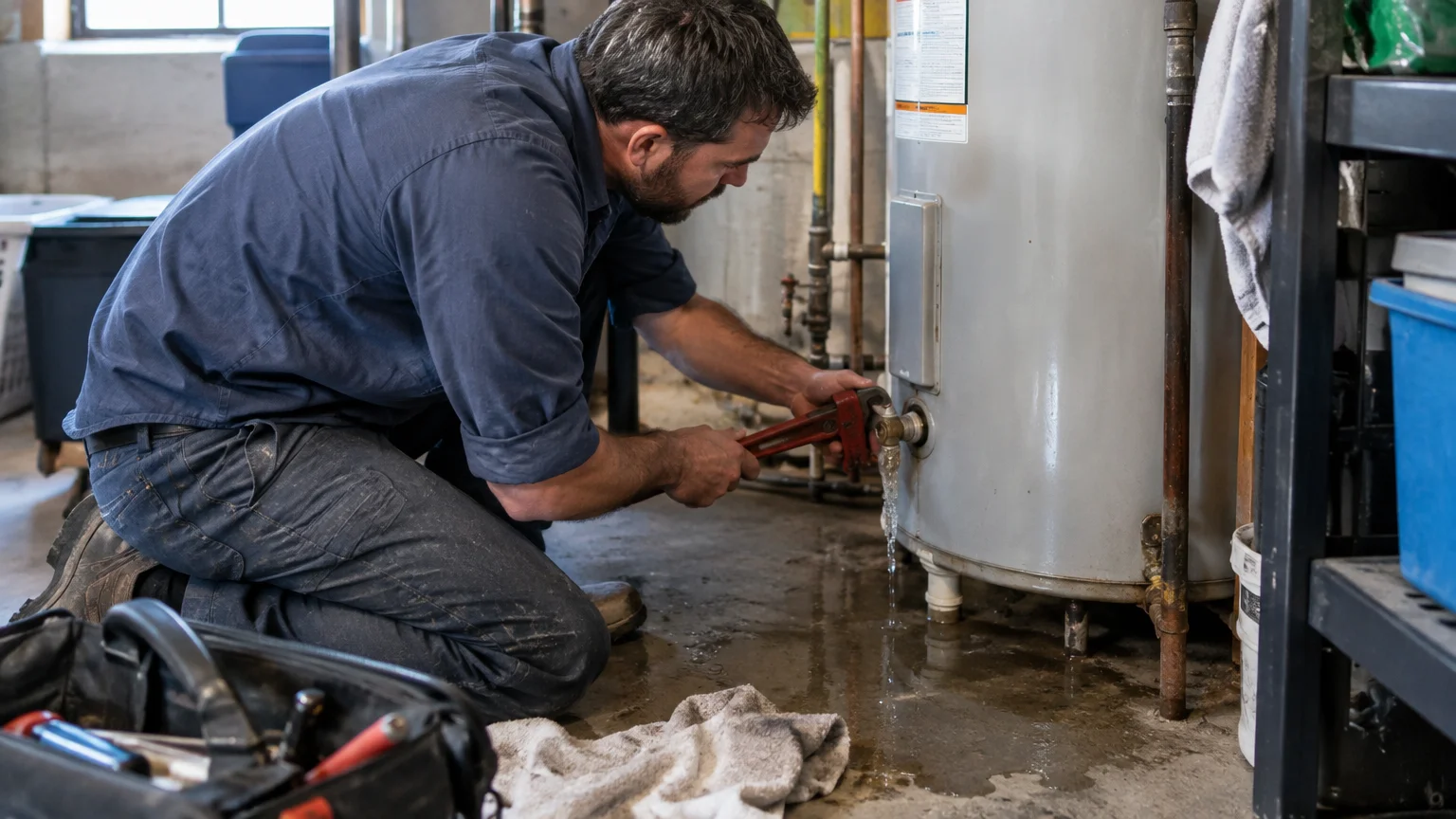
A water heater problem is urgent when the tank leaks, water is scalding, gas may be present, or the unit creates a fire or electrical danger. A simple loss of hot water may be less urgent, but it still needs timely repair for homes, rentals, and businesses.
Signs of a dangerous or failing water heater
Warning signs include water around the tank, a damaged relief valve, loud banging, a strong burning smell, smoke, or repeated tripped breakers. A leaking tank can release more water as it continues to fill. Turn off the heater’s water supply if safe. Use the energy shutoff only when it is easy to reach and clearly marked.
Gas odors require special care. Do not light matches, operate switches, or use phones inside an area that strongly smells of gas. Leave the building and contact the gas utility or emergency services from a safe place. A plumber can handle water-side repairs, but gas emergencies must follow local safety rules.
What to do when there is no hot water
First, check whether the issue affects every hot-water fixture. One cold faucet may have a local mixing valve or fixture problem. No hot water throughout the building may involve the heater, power supply, thermostat, burner, or control system.
Do not remove covers or test live electrical parts. Water Heater Repair can help diagnose tank and tankless systems. The right solution depends on the heater type, age, visible damage, and safety condition.
When should you call an emergency plumber?
A homeowner should call an emergency plumber when water cannot be stopped, sewage backs up, a hidden leak is suspected, or a plumbing failure threatens the building. Professional help is also needed when a repair involves gas, electricity, pressurized lines, or dirty water.
Situations that need licensed professional help
Call promptly for a burst pipe, flooding, a leak inside a wall, repeated sewage backup, or a water heater leak. Professional help is also right when the main shutoff will not close, several fixtures fail together, or a repair attempt makes the problem worse.
A homeowner may safely tighten a loose faucet handle, clear a removable screen, or use a plunger on a simple clog. These tasks should stop when water spreads, parts break, the cause is unclear, or unsafe conditions appear. Leaks & Burst Pipes can help with urgent leak detection and pipe repair needs.
What information to provide when requesting urgent service
Explain what happened, where the water or sewage is located, and whether the main valve is closed. It helps to mention the building type, affected fixtures, visible damage, and any gas, electrical, or contamination concerns.
Tenants should notify the owner or manager as soon as possible. Business owners should protect customers and staff by closing unsafe areas. Plumbing Riverside California can help review the situation and identify the right emergency plumbing response.
How can you prepare for future plumbing emergencies?
Preparation makes a plumbing emergency easier to manage. Every household, rental, and business should know where the main water shutoff is. Keep basic supplies in an easy-to-reach place.
Essential shutoff locations and emergency supplies
A simple emergency kit may include a bucket, towels, gloves, a flashlight, and an adjustable wrench. Store it away from areas that could flood. Keep contact details for the property manager, water utility, insurer, and trusted plumbing company in a safe place.
Property owners should label fixture shutoffs and test them during routine checks. Inspect exposed supply lines, washing machine hoses, water heater connections, and visible pipe joints. Replacing worn parts before failure may reduce the chance of sudden damage.
Homeowners can learn about gas leak checks only through safe, approved methods. Strong gas odors, hissing sounds, or suspected leaks require leaving the area and contacting the gas utility or emergency services. Never search for a gas leak with a flame.
Key takeaways for homeowners, tenants, and property managers
- Stop water at the fixture or main valve when it is safe.
- Keep people away from sewage, wet electrical areas, and gas hazards.
- Treat spreading water, major backups, and burst pipes as urgent.
- Use simple DIY checks only when the cause and conditions are safe.
- Give the plumber clear details about the leak, damage, and shutoff status.
A plumbing emergency is defined by risk, not by the age or value of a fixture. Fast action can limit damage, but unsafe repairs can create larger problems. Contact us today for urgent plumbing guidance and service from Plumbing Riverside California.
Frequently Asked Questions
How do you check for a gas leak?
Never use a flame to find a gas leak. A strong gas smell, hissing sound, or suspected leak means everyone should leave the building at once. Do not switch lights or use phones inside. From a safe place, contact the gas utility or emergency services. A plumber can address related water and appliance connections after the area is safe.
What should someone do if a toilet keeps running?
A running toilet is usually not an emergency if the shutoff valve works and no water reaches the floor. Turn the valve clockwise to stop the flow. Then check the flapper, float, and handle for simple problems. If the valve fails, the toilet leaks, or several toilets back up, professional Toilet Repair is appropriate.
Why does a toilet keep running after it is flushed?
A toilet may keep running because the flapper does not seal, the float is set wrong, the fill valve is worn, or the handle chain catches. A homeowner can check these parts without forcing them. If the bowl overflows, the shutoff fails, or water appears around the base, the issue needs prompt plumbing attention.
Is a slow drain an emergency?
A slow drain is not always an emergency. One sink that drains slowly may respond to basic strainer cleaning or a safe plunger. It becomes urgent when several fixtures drain slowly, sewage rises, foul water returns, or the problem causes flooding. Avoid chemical cleaners when the cause is unknown.
Can a homeowner repair a burst pipe?
A homeowner may close the main water valve and move items away from clean water when safe. Cutting, clamping, or opening a burst pipe is not a safe general repair, especially inside a wall or near electricity. A licensed plumber should inspect the line, stop hidden leaks, and confirm that the damaged section is secure.
If you are unsure what you are dealing with, get help before the issue becomes worse. Plumbing Riverside California serves Riverside property owners with plumbing advice and emergency support.
If you are not sure what you are dealing with, it is worth having someone look at it before it turns into a bigger job. Get in touch with Plumbing Riverside California in Riverside, California today and we will tell you where you stand.