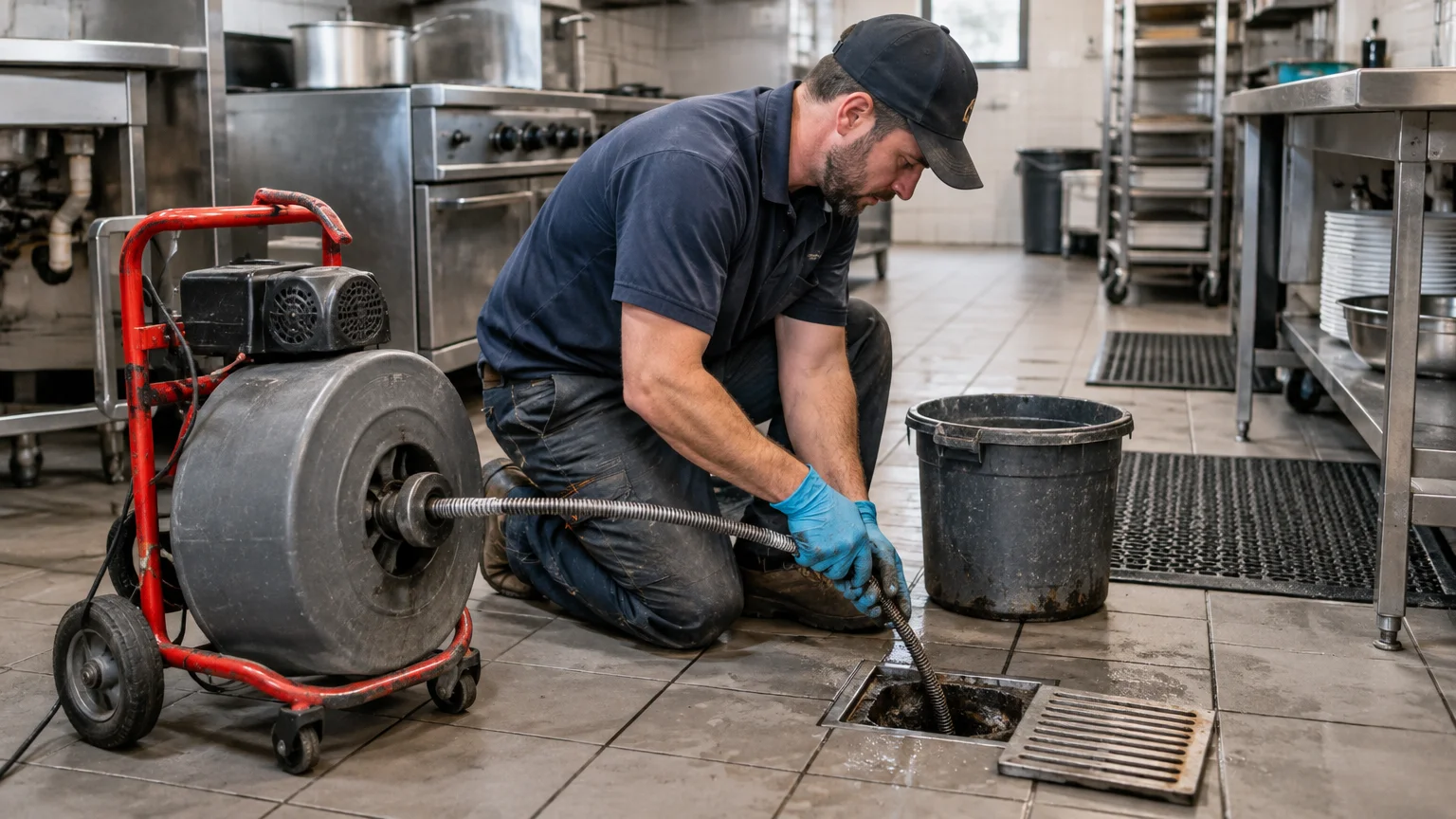
Commercial floor drain problems can point to a small clog or a larger plumbing issue. Slow flow, standing water, bad smells, and repeat clogs are common signs. In Riverside, staff can keep drain covers clear and watch for changes. When several drains are affected or wastewater backs up, a licensed plumber should check the system.
What are the common signs of commercial floor drain problems?
Slow drainage, standing water, repeat clogs, bad smells, and gurgling can all signal trouble. One sign may come from a clog near a drain. Several signs at once may point to a shared pipe or sewer line problem. Early checks can help limit water damage and keep work areas safer.
How do slow drainage, standing water, and recurring clogs differ?
A slow drain takes longer than usual to carry water away. Standing water means the water is not draining well, or has stopped draining. A recurring clog returns after someone clears the drain. This can mean buildup remains in the pipe, or a deeper issue is present.
The location of the trouble can offer a clue. If one floor drain is slow, the clog may be close to that drain. If several nearby drains slow down together, they may use a shared pipe. Staff can note which drains are affected and when the issue happens. Those details can help a plumber find the cause.
What do odors, gurgling, and sewer backups indicate?
A bad smell may come from waste, grease, or water sitting in the drain. A drain trap is a curved pipe section that holds water and helps block sewer gas. If the trap dries out or fails, smells may enter the building. Gurgling can mean air is trapped or water is not moving well through a pipe.
A sewer backup is more serious. It happens when wastewater flows back through a drain instead of away from the building. Keep people away from dirty water, and do not wash it into another drain. Plumbing Riverside California can help businesses assess repeat drain concerns and decide when plumbing service may be needed.
What causes floor drains to clog or back up in commercial buildings?
Grease, food scraps, dirt, and other debris can collect inside commercial drain pipes. Busy use can make buildup more likely, especially in kitchens, wash areas, and work spaces. A clog may also come from a damaged pipe, poor pipe slope, or sewer line trouble. The right fix depends on where the blockage formed and what caused it.
How do grease, food waste, and sediment affect commercial drains?
Grease can cool and stick to the inside of a pipe. Food scraps and sediment can catch on it and make the opening smaller. Over time, water may drain slowly as more material builds up. Floor drains should not be used to get rid of cooking oil or food waste.
A drain plumbing snake is a tool that turns or pushes through a pipe to break up or remove a clog. It may help with some blockages, but it does not stop grease from coming back. Baking soda and vinegar are common home drain tips, but they may not clear a deep or dense commercial clog. Drain cleaning enzymes are products that may help break down some organic waste. They cannot fix damaged pipes or clear every blockage. Staff should follow product labels and workplace safety rules.
Can sewer line damage, poor installation, or heavy use cause recurring problems?
Yes. A cracked, crushed, or shifted sewer pipe can slow water flow and cause repeat backups. A pipe with poor slope may not carry water and waste away as it should. These problems can look like a stubborn clog, but clearing the drain will not fix the cause.
Heavy use can also put more strain on a drain system. A drain that handles frequent cleaning, food waste, or wash water may need a plan suited to that use. If several drains clog again soon after clearing, the problem may be farther down a shared line. A plumber can check for pipe damage, buildup, and other causes before suggesting a repair.
How are commercial floor drain problems diagnosed and repaired?
A plumber first checks which drains are affected and asks when the trouble began. They may look inside the drain, test water flow, and check for signs of a wider backup. The repair depends on what they find. A small clog may need clearing, while repeat trouble may call for a camera check or sewer line repair.
When are drain cleaning and mechanical clearing appropriate?
Drain cleaning can remove grease, sediment, and other buildup from a pipe. Mechanical clearing uses tools such as a drain plumbing snake to break up or pull out a blockage. These methods may work for a clog that can be reached and is not caused by a broken pipe. The plumber picks a method based on the drain and the blockage.
An enzyme product may help with some organic buildup, but it cannot clear every clog. Staff should not mix cleaning products or pour harsh chemicals into a drain without checking product guidance and site rules. Mixing products can cause unsafe fumes or harm plumbing. For one slow drain without a backup, staff can remove visible debris from the cover and keep the area clear. This simple upkeep does not require a plumber when it is safe and allowed by site rules.
When might a plumber use a camera inspection or repair a sewer line?
A camera inspection uses a small camera on a cable to view the inside of a pipe. A plumber may suggest one when clogs keep coming back, several drains are affected, or the cause is unclear. The view can help find buildup, cracks, root growth, or a shifted pipe.
If the pipe is damaged, clearing the clog may only help for a short time. The plumber can explain whether a repair or replacement is needed and which part of the system is affected. A sewer backup, wastewater near a work area, or repeat blockages needs prompt professional help. Plumbing Riverside California can explain drain cleaning and repair options for properties in Riverside.
How can businesses prevent recurring floor drain problems?
Businesses can help prevent repeat clogs by keeping grease, food waste, and loose debris out of floor drains. Regular checks can help staff spot slow flow, bad smells, or standing water before a backup happens. A maintenance plan should fit how the building is used and what waste enters its drains.
What maintenance practices help control grease and debris?
Staff can keep drain covers in place, remove visible debris, and clean around drains during routine upkeep. In food-service spaces, grease and food scraps should go into approved disposal or collection systems, not floor drains. Staff should also note changes in drain flow instead of waiting for water to stop moving.
Useful steps include:
- Keep drain covers clear and in place.
- Keep cooking grease and food scraps out of floor drains.
- Record repeat clogs, slow flow, bad smells, or gurgling.
- Follow product labels and workplace safety rules for drain products.
- Arrange drain cleaning if buildup returns or water slows again.
These steps can help staff spot changes early, but they cannot fix a damaged pipe. Enzyme products may suit some upkeep plans, but they should not replace a plumber’s check when a drain backs up or keeps clogging. Businesses should follow local rules for waste and grease handling in Riverside.
When should a business call a licensed plumber?
A business should call a licensed plumber when a clog returns, several drains slow at once, wastewater backs up, or a bad smell continues after basic cleaning. A plumber can check whether the issue affects one drain or a shared line. Quick attention may help prevent harm to floors, equipment, and nearby work areas.
Staff should keep people away from wastewater and follow the building’s safety plan while waiting for help. They should not try to open or repair a sewer line. A single drain cover with visible debris is different: staff can clear that debris safely when site rules allow. For repeat commercial floor drain problems, a qualified check can find the cause and next step.
Key takeaways
- Slow flow, standing water, bad smells, and repeat clogs can signal drain trouble.
- Grease, food scraps, sediment, heavy use, and pipe damage are common causes.
- Staff can clear visible debris, but repeat clogs need professional attention.
- Camera inspections can help find problems deeper in a pipe.
- Keeping waste out of drains can help reduce buildup and backups.
Frequently Asked Questions
What causes a commercial floor drain to smell?
A floor drain may smell when waste or grease collects in the pipe, or its water-filled trap is dry or not working well. A sewer smell that keeps coming back can point to a wider plumbing issue. Staff can clear visible debris, but should ask a plumber to check smells that continue.
Can a drain snake clear a commercial floor drain?
A drain snake can break up or remove some clogs in a commercial floor drain. It may not remove all grease buildup or fix a damaged pipe. If the drain clogs again soon after clearing, or several drains are affected, a plumber can check for a deeper cause.
Do baking soda and vinegar clear a blocked floor drain?
Baking soda and vinegar may not clear a deep, dense, or repeat commercial drain blockage. They do not repair a cracked pipe or remove every kind of buildup. Staff should follow site safety rules and product guidance, and should not mix drain products. For repeat clogs, a plumber can find the cause.
When is a floor drain backup an emergency?
A floor drain backup needs quick attention when wastewater enters the building, spreads near people or equipment, or affects more than one drain. Keep people away from the water and follow the site safety plan. Contact a licensed plumber to find the source and help limit further damage.
Conclusion
Commercial floor drain problems can start with slow flow and grow into repeat clogs or a sewer backup. Staff can keep drain covers clear and stop grease and food scraps from entering drains. A plumber should check repeat problems, several affected drains, and any wastewater backup. For help with a commercial drain concern in Riverside, Contact us.
If you are not sure what you are dealing with, it is worth having someone look at it before it turns into a bigger job. Get in touch with Plumbing Riverside California in Riverside, California today and we will tell you where you stand.