Automatic faucet and flush valve repair can restore reliable use when a sensor faucet stops working or a toilet keeps running. Start with safe checks: clean the sensor lens and see if the water supply is open. Leave leaks, wiring faults, and work inside the fixture to a qualified plumber.
Busy restrooms need faucets and flush valves that work each time. A small fault can waste water, interrupt service, and frustrate visitors. In Riverside, knowing what to check—and when to stop—can help protect people and plumbing. Plumbing Riverside California helps property owners understand repair needs and plan the next step.
Table of Contents
- How do automatic faucets and flush valves work?
- What are the most common problems with automatic faucets and flush valves?
- What should you check before calling for a repair?
- How are automatic faucets and flush valves diagnosed and repaired?
- When should a commercial automatic faucet or flush valve be replaced?
- How can businesses prevent repeat problems and downtime?
- What should you expect from professional commercial restroom plumbing service?
How do automatic faucets and flush valves work?
Automatic faucets use a sensor to notice hands near the sink. The sensor tells a valve to let water flow, then tells it to stop when hands move away. Many faucets use batteries or power from the building. The setup can vary by model, so the maker’s instructions matter.
How sensor faucets detect users and control water flow
The sensor lens is the small window that sends and receives a signal. When it detects a hand, the faucet control opens a solenoid valve. A solenoid valve is an electrically controlled part that starts or stops water flow. Some faucets also have a control for water temperature or flow.
A dirty lens, weak battery, or stuck valve can affect how the faucet works. Dirt and water spots may confuse the sensor. A faucet may also stop working if its water supply is shut off or its filter is blocked. The filter catches small bits before they reach the valve.
How commercial flush valves release water
A flush valve sends water from the supply line into a toilet or urinal. In an automatic model, a sensor notices use and tells the valve to flush. Some models use batteries, while others connect to building power. The valve must suit both the fixture and the water supply.
A flush valve differs from a tank toilet’s flapper. A flush valve controls water at the supply line. A flapper releases water from a toilet tank. Knowing which kind is installed can help narrow down the fault and help a plumber choose parts that fit.
What are the most common problems with automatic faucets and flush valves?
Common problems include no water, water that will not stop, weak flow, unwanted starts, and toilets that will not flush. Causes can include low power, a dirty sensor, a blocked filter, a worn seal, or a failed valve. One symptom alone does not show which part needs repair.
Faucets that do not turn on, shut off, or maintain steady flow
If the faucet will not turn on, look for dirt on the sensor lens and check that the water supply is open. If water keeps flowing, the sensor may be blocked, or the valve may not close. Weak or uneven flow can point to a blocked aerator, filter, or supply issue.
An aerator is the small screen at the faucet outlet that helps shape the water flow. A faucet that starts and stops by itself may be reacting to reflections or nearby movement. A loose power connection or a failing solenoid can also cause odd behavior. Keep the sink area clear while watching the faucet, and do not put fingers or tools inside its housing.
Flush valves that keep running, fail to flush, or leak
A toilet that keeps running may have a valve that does not close fully. A toilet flush valve repair kit may include seals, but the right kit depends on the fixture model. A part that does not fit can leave the problem in place or lead to a leak.
A flush valve that will not flush may have a power, sensor, water supply, or internal valve fault. Do not ignore water around a fixture or valve. If it is safe and easy, shut off the local supply, keep people clear, and arrange help. Toilet problems may also need flush valve repair, especially when the toilet keeps running.
What should you check before calling for a repair?
A few safe checks may fix simple problems without a service visit. Clean the sensor lens, look for a power light, and check whether the water supply valve is open. Stop if water is leaking, wiring looks damaged, or the fixture needs to be opened.
Safe checks for batteries, power, sensor lenses, and water supply
Use this checklist before asking for help:
- Gently wipe the sensor lens with a soft, damp cloth, then dry it.
- Check the battery area or visible power light, if the model has one.
- Move items that may block the sensor near the sink or toilet.
- Look for a shut supply valve or a bent, visible supply line.
- Note when the fault happens and whether other fixtures have the same issue.
These checks do not require taking the fixture apart. A business owner or staff member can clean an exposed lens and report what they see. Do not use strong cleaners on the sensor or force a valve handle. Follow the maker’s care guide when one is available.
Why repeated resets or disassembly can make a problem worse
A reset may clear a short fault, but doing it again and again can hide a problem that needs repair. Opening a powered fixture or valve can expose people to electrical risk or cause water damage. Small parts can also break or go back in the wrong order.
Stop using the fixture if there is a strong leak, bare wiring, or water near an electrical connection. Keep people away from the area. Shut off the supply only if its valve is easy to reach and safe to use. A plumber can check the cause instead of guessing at parts.
How are automatic faucets and flush valves diagnosed and repaired?
A plumber first checks the fixture type, model, and symptoms. They look at power, sensor response, the water supply, and visible leaks before testing parts inside. The goal is to find the cause, not simply replace the first worn-looking part.
Inspecting sensors, solenoids, filters, cartridges, and connections
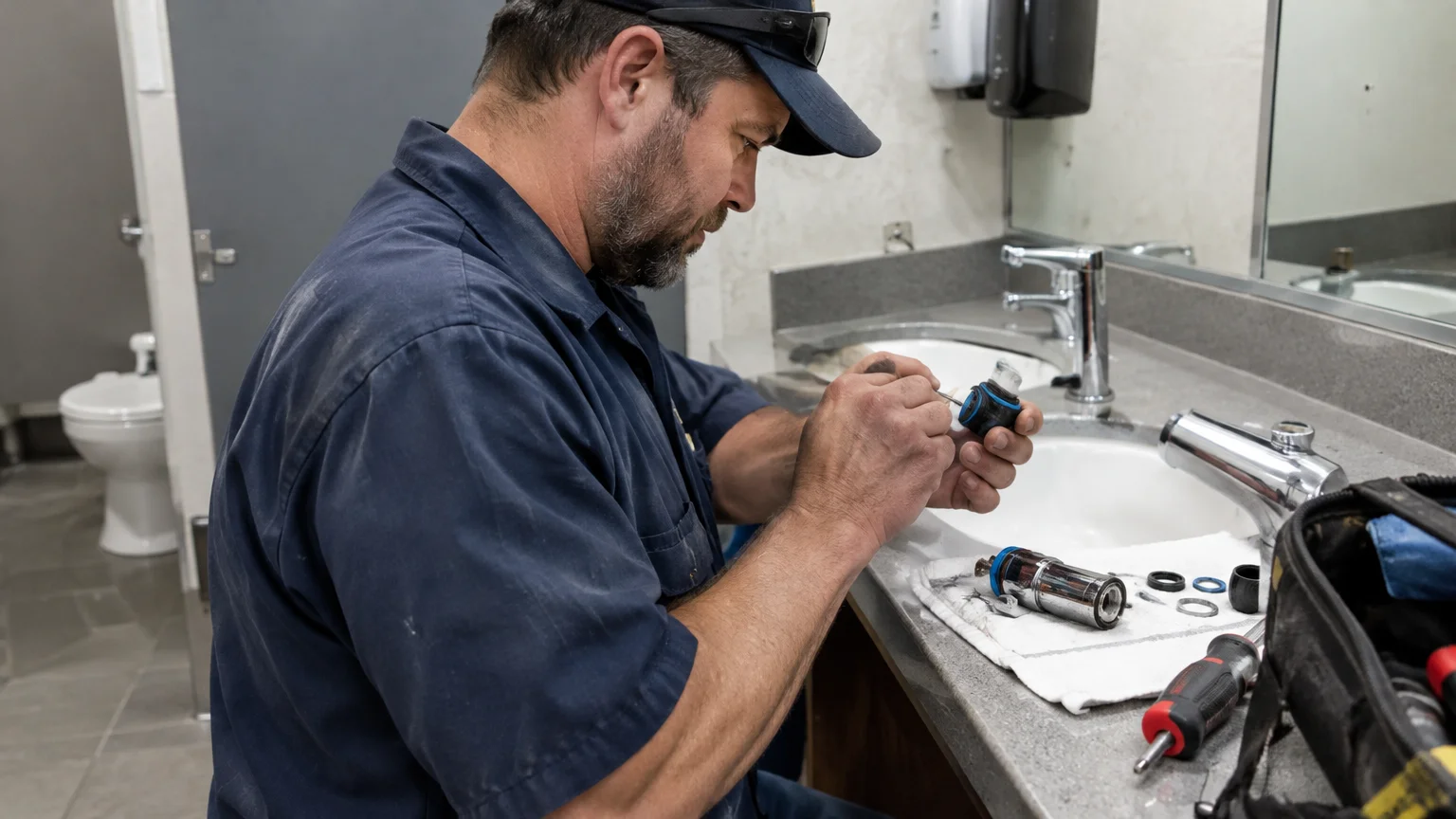
A service check may include the sensor, solenoid valve, filter, cartridge, and supply connections. A cartridge is an inside part that controls water flow in some faucets. The plumber may clean or change a blocked filter, fix a loose connection, or fit a part made for that fixture.
For toilet flush valve repair, the plumber checks whether the valve shuts fully and whether seals or other parts are worn. A toilet with a tank uses different parts from a commercial flushometer. A flushometer is a valve joined straight to a water supply line, rather than to a tank.
Testing operation and checking for leaks after repair
After the work, the plumber runs the fixture as people normally use it. They check that the faucet starts and stops as it should, and that the flush valve opens and closes. They also look for leaks around the fixture and its supply connections.
Testing matters because a fixture can seem fixed but still waste water or fail during regular use. Staff should report if the fault returns. For Moen sink faucet repair, the model and part details help guide the work. The same care applies to other brands and commercial fixtures.
Automatic faucet and flush valve repair is one part of wider plumbing care. A related drain repair, plumbing repair, or pipe repair may be needed if the fault is not limited to one fixture. A plumber can check whether other signs point to a separate problem, rather than changing faucet parts without a clear reason.
When should a commercial automatic faucet or flush valve be replaced?
Repair may make sense when the fixture is in good shape and the needed part is available. Replacement may be a better choice when problems keep returning, parts are hard to find, or the fixture no longer fits the restroom’s needs. A plumber can review the condition, use, and fit before work starts.
Repair considerations: part availability, recurring faults, and fixture condition
One worn seal or sensor may be a practical repair. But repeated faults can point to deeper wear, a poor fit, or heavy use. Rust, cracks, and damaged connections also affect whether repair is a sound choice.
The right toilet flush valve repair kit must fit the valve model. Kits that look alike may have seals or sizes that differ. If the model label is gone, a plumber can inspect the fixture and find the matching parts. Avoid choosing a kit by looks alone.
Replacement considerations: compatibility, accessibility, and water efficiency
A new faucet or valve must fit the sink or toilet, connect to the supply, and work with the power source. In a public restroom, people with different needs should be able to use the controls. A plumber can check space, access, and the fixture’s planned use.
A water-saving fixture may help reduce waste when chosen and installed well. The right choice depends on the building and its plumbing. Check why the old fixture failed before replacing it. A supply problem or wrong setting could affect a new fixture, too.
How can businesses prevent repeat problems and downtime?
Regular care helps staff spot small issues before they interrupt restroom use. Clean sensors as the maker directs, look for drips, and report changes in flow or flushing. A simple care plan should match how often people use the restroom.
Routine cleaning and inspection for high-use restrooms
Use gentle cleaning methods that will not scratch sensor lenses or harm seals. Do not let cleaning products collect around the base of faucets or flush valves. During regular checks, look for slow drips, water that keeps running, weak flow, or slow sensor response.
Staff can report a problem without opening the fixture. A short note about its location, symptoms, and time of day can help a plumber find the cause. If a toilet keeps running, mark it for prompt attention to limit water waste and reduce disruption.
Planning maintenance around occupancy and fixture demand
Plan checks around restroom use and the building’s needs. A busy site may need more frequent visual checks than a small office. Keep notes about repairs, model details, and repeat symptoms so future work can be planned well.
In Riverside, a property manager can ask Plumbing Riverside California about care planning for commercial restrooms. If several fixtures have faults, note whether they share a water supply or power source. That detail can help show whether the issue affects one fixture or more of the building.
What should you expect from professional commercial restroom plumbing service?
A clear service visit starts with fixture details and a plain account of the problem. The plumber should inspect the system, explain repair choices, and test the fixture afterward. The business should know what was done and whether more checks are needed.
Preparing fixture details and describing symptoms clearly
Before service, note the restroom location, fixture type, brand, and model if you can see it. Describe what happens, when it began, and whether the fault is steady or comes and goes. Mention leaks, power lights, odd sounds, or other fixtures with the same issue.
Do not remove covers just to find a model label. A photo of the outside may help if you can take it safely. Keep the area clear for the plumber, and tell staff if the fixture should stay out of use.
Confirming the repair, testing performance, and documenting follow-up needs
After the repair, ask which part caused the problem and what work was done. Confirm that the faucet or flush valve was tested and that visible connections are dry. Write down any care advice or signs that staff should watch for.
A clear repair record can help spot repeat faults. It can also help the next person identify the fixture and its parts. If water damage or other plumbing issues appear, note them for review, too. For a water heater concern, Water Heater Repair can assess the unit. For suspected gas leaks, do not search for the source yourself; leave the area and contact the gas utility or emergency services from a safe place. Gas Line Plumbing handles gas line work.
Key takeaways
- Automatic fixtures need sensors, power, valves, and a steady water supply.
- Cleaning a sensor lens and checking visible power are safe first steps.
- A toilet flush valve repair kit must fit the installed valve.
- Stop and get help for leaks, damaged wiring, or repeat faults.
- Testing after repair helps show that the fixture works and does not leak.
Frequently Asked Questions
How do you fix a toilet that keeps running?
A running toilet may have a flush valve that will not close, a worn seal, or a sensor fault. Check for an easy-to-see blockage and note whether the toilet has a tank or a direct-supply valve. Do not open a commercial valve. A plumber can find the cause and fit parts that match.
Can a homeowner clean an automatic faucet sensor?
Yes. A homeowner or staff member can gently wipe the exposed sensor lens with a soft, damp cloth, then dry it. Keep strong cleaners and tools away from the lens. If the faucet still fails, or water leaks, stop and ask a plumber to check it.
What causes low water pressure in a house?
Low water pressure can come from a partly shut valve, a blocked fixture screen, a supply problem, or a leak. Check whether one faucet or several fixtures are affected. If pressure falls across the property or a leak is visible, a plumber can inspect the pipes and fixtures safely.
What should you do if a water heater is leaking from the bottom?
Keep people away from standing water near electrical parts. If safe, shut off the water supply to the heater and stop using it. A leak near the bottom can have several causes, so arrange a professional check. Water Heater Repair can help assess the unit.
How do you check for gas leaks?
Do not use a flame or switch anything on or off if you suspect a gas leak. Leave the area and contact the gas utility or emergency services from a safe place. A qualified professional can inspect gas pipes. Gas Line Plumbing handles gas line work; do not try to find a leak yourself.
Conclusion
Automatic faucet and flush valve problems can come from dirt or worn parts. Safe checks may help, but leaks, electrical faults, and repeat problems need professional care. Plumbing Riverside California can help businesses in Riverside assess restroom plumbing and plan suitable repairs. Contact us to arrange help with a faulty faucet or flush valve.