Low water pressure in house plumbing can come from a closed valve, blocked fixture, hidden leak, bad regulator, or supply issue. One weak faucet often has a local blockage. Weak flow at every fixture may point to pipes, pumps, tanks, or the city supply. These checks help find the likely cause safely.
A sudden change needs attention, especially when several fixtures lose flow. A slow shower may need simple cleaning. Damp walls, noisy pipes, or cloudy water may show a deeper fault. The steps below help homeowners, tenants, and property owners decide what to check next.
Table of Contents
- What causes low water pressure in a house?
- How can I tell where the pressure problem is coming from?
- What should I check first when water pressure drops?
- Can a clogged pipe or fixture cause low water pressure?
- How do pressure regulators and water supply systems affect pressure?
- Can I fix low water pressure myself?
- When should I call a plumber about low water pressure?
- Frequently Asked Questions
- Key takeaways
- Conclusion
What causes low water pressure in a house?
Low pressure may come from the public supply, the building pipes, or one fixture. Common causes include closed valves, blocked aerators, damaged pipes, leaks, regulator problems, and changes in the water system. First, find out whether one outlet or the whole property is affected.
Common household and municipal causes
A shutoff valve may have moved during repair work. A partly closed valve limits water flow. A pressure-reducing valve may also wear out. This valve controls incoming pressure before water reaches the fixtures.
Old metal pipes can narrow as rust and mineral deposits build up inside. A leak may reduce flow before water reaches a faucet. A failing pump, low tank level, or blocked filter can cause the same symptom.
The public supply may have lower pressure during repairs, high demand, or a nearby main break. A property manager or local water provider may know about planned work. Plumbing Riverside California can help Riverside property owners separate a supply problem from a private plumbing fault.
Riverside homeowners may also notice pressure changes after nearby construction. Dirt can enter a line and block a screen. Recent work should always be part of the first check.
How pressure problems differ from flow problems
Pressure is the force that pushes water through a pipe. Flow is the amount of water that reaches an outlet over time. A faucet may have normal pressure in the pipe but poor flow because its screen or valve is blocked.
This difference matters during testing. If water starts strong but weakens when another fixture opens, the system may have a supply or pipe restriction. If only one shower or faucet is weak, the fault is more likely local.
How can I tell where the pressure problem is coming from?
The location of weak flow gives the best early clue. Test a bathroom faucet, kitchen faucet, shower, and outdoor spigot. Note whether cold water, hot water, or both sides are affected.
Checking whether one fixture or the whole house is affected
Run one fixture at a time. Then open two fixtures together and watch the change. If only one outlet is weak, clean its aerator or showerhead first. A blocked cartridge or stop valve may also limit that fixture.
If every outlet is weak, check the main shutoff valve. Ask nearby properties if they have the same problem. Tenants should report the change to the owner or manager. A sudden whole-house drop needs more care than one slow tap.
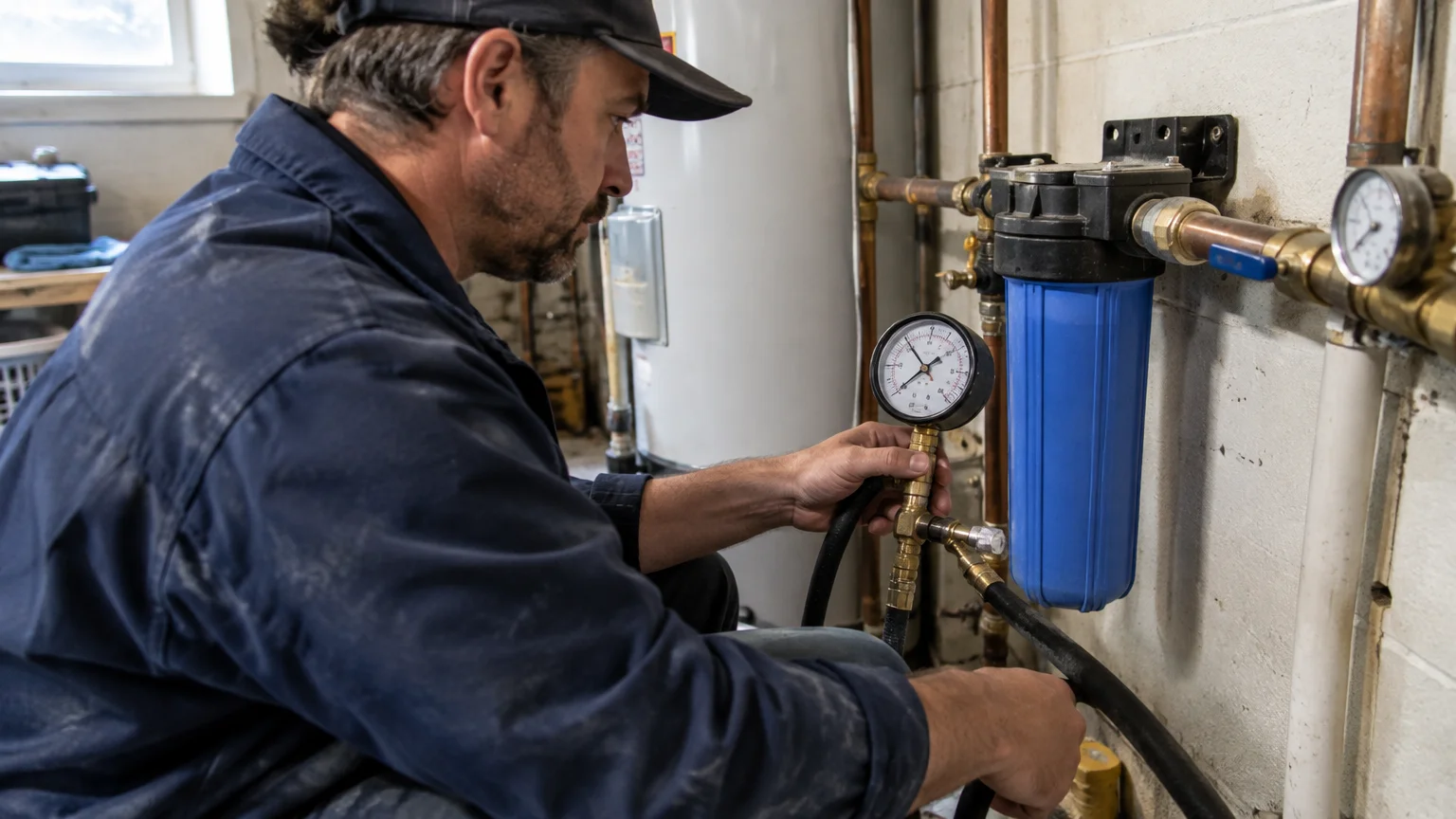
A pressure gauge can help a trained person compare pressure when no water runs with pressure during use. The first reading is called static pressure. The second is called flow pressure. A large drop can show a restriction or failing part.
Signs of a private plumbing issue versus a water-supply issue
A private issue may affect only one property. It may cause dripping sounds, wet cabinets, stained ceilings, meter movement, or sharp pressure changes when fixtures run. A supply issue may affect several nearby buildings at once.
Do not open a street-side meter box or change public equipment. Those parts may belong to the water provider. A licensed plumber can test the home side of the system and explain what the owner can control.
What should I check first when water pressure drops?
Start with simple checks before removing parts or opening walls. Confirm that the main shutoff valve is open. Then inspect accessible fixtures and pipes. Stop if water is near electrical equipment or a pipe looks cracked.
Inspecting shutoff valves, faucets, and visible pipes
Look under sinks, behind toilets, near the water heater, and where the main line enters. A small handle should normally be fully open. Do not force an old valve, because it may break and release water.
Remove a faucet aerator only if it comes off easily. Rinse away grit and replace the parts in the same order. A clogged showerhead may need soaking and rinsing. A damaged cartridge may need replacement by someone who knows the fixture.
Check visible pipes for wet spots, green marks, rust, and stains. Listen for water when all fixtures are closed. These signs may point to a hidden leak instead of a pressure fault.
Checking for leaks, clogs, and recently changed fixtures
Think about what changed before the pressure dropped. Recent plumbing work, a new faucet, a water heater repair, or a valve replacement may have left debris in a line. Construction work can also move sediment into screens.
A toilet that keeps running wastes water and may reduce flow in some systems. Common causes include a worn flapper, wrong chain length, or bad fill valve. A small adjustment may help, but constant refilling should not be ignored.
If the water meter moves while all water is off, the property may have a leak. Leaks & Burst Pipes need quick attention when water is visible or damage is spreading. Plumbing Riverside California serves Riverside and can check warning signs before they become a larger repair.
Can a clogged pipe or fixture cause low water pressure?
Yes. Mineral buildup, rust, sediment, and damaged parts can narrow the path where water moves. The blockage may be inside an aerator, showerhead, cartridge, valve, filter, or old supply pipe.
Mineral buildup in aerators, showerheads, and valves
Small screens catch grit before it reaches an outlet. Over time, the screens can fill with sand or mineral deposits. This often makes one faucet slow while nearby fixtures work normally.
Showerheads can collect deposits around their small openings. Cleaning a removable head is usually a safe home task when the fitting is in good shape. Tenants should follow the lease and avoid changes that could damage the fixture.
If cleaning does not help, the blockage may be inside the cartridge or supply valve. Do not keep forcing a stuck part. Old fittings can break and release water quickly.
When corrosion or pipe damage restricts water flow
Corroded pipes may become narrow inside even when the outside looks sound. Flakes can move through the system and block screens. A pipe may also bend, collapse, or suffer damage during building work.
These faults often affect more than one fixture. They may also cause discolored water, leaks, banging sounds, or repeated clogs. Pipe replacement may be needed when the blockage is inside an inaccessible section.
A professional can compare readings at several points and inspect exposed pipework. Water heater repair may help when weak hot water affects only the hot side. The heater inlet screen or valve may be restricted. Water heater replacement is a separate choice when the unit itself has reached the end of its useful life.
How do pressure regulators and water supply systems affect pressure?
Pressure regulators, tanks, pumps, filters, and public mains all affect water flow. A fault in any one part can cause weak or changing pressure. The right repair depends on testing, not guesswork.
What a pressure-reducing valve does
A pressure-reducing valve lowers incoming pressure to protect pipes and fixtures. Its inner parts can wear, stick, or collect debris. When this happens, pressure may stay low throughout the building or change when water use begins.
The valve may sit near the main shutoff or where the service line enters. Do not adjust it without proper testing. Too much pressure can damage fixtures, while too little makes normal tasks difficult.
A plumber may test pressure before and after the valve. This can show whether the regulator is restricting flow. The same test may reveal a blocked filter or another control part.
How tanks, pumps, and municipal supply conditions can matter
Homes with storage tanks or booster pumps depend on these parts for steady service. A low tank level, blocked inlet, electrical fault, or pump problem may reduce flow. Water Tanks need regular checks so their valves and connections stay reliable.
Municipal conditions can change during main repairs or high demand. Ask nearby residents whether their pressure changed too. If several homes have the same problem, the water provider may need to inspect the supply.
Emergency Plumbing is needed when a pressure drop comes with a burst pipe, flooding, or fast leak. Shut off the main supply when safe. Stay away from damaged electrical equipment.
Can I fix low water pressure myself?
Homeowners can clean a removable screen, check an accessible valve, and look for visible leaks. They do not need a professional for these simple checks when they can work safely. They should not open pressurized equipment, change public parts, or work near gas and electrical hazards.
Safe troubleshooting steps for homeowners and tenants
Use this basic order:
- Check whether one fixture or the whole property is affected.
- Confirm that accessible shutoff valves are fully open.
- Clean a removable aerator or showerhead when it is safe.
- Look for wet spots, stains, running toilets, and odd sounds.
- Ask the manager or water provider about wider supply problems.
Turn off the main valve if a pipe sprays or a leak spreads. Dry the area only when safe. Tenants should report the problem quickly instead of making permanent repairs without approval.
Slow drains can happen at the same time as other plumbing problems. Drain cleaning may help when buildup is causing poor drainage, but it will not repair a bad pressure regulator or supply pipe.
Repairs that require a licensed plumber
A licensed plumber should inspect hidden leaks, damaged pipes, regulators, pumps, and whole-house pressure faults. Professional help is also needed for soldering, cutting pipe, opening walls, or work around gas appliances.
Never use a flame to test for gas leaks. A gas smell means leaving the building and calling the gas utility or emergency services from a safe place. Water pressure work should not create another safety risk.
When should I call a plumber about low water pressure?
Call a plumber when the problem affects the whole property, returns after cleaning, or comes with signs of leaks or pipe damage. Prompt help is also wise when the home has old pipes, a tank, a pump, or an untested regulator.
Warning signs of leaks, pipe damage, or serious system faults
Call for professional help when you see any of these signs:
- Water stains, damp walls, soft flooring, or mold-like smells
- A meter that moves while all fixtures are closed
- Sudden pressure loss throughout the property
- Rusty water, repeated clogs, or flakes in faucet screens
- Loud banging, hissing, or water sounds behind walls
- A burst pipe, flooding, or water near electrical equipment
A pressure problem that starts after plumbing work also needs review. Debris may be trapped in a valve, or a connection may not be fully open. Quick testing can stop the issue from spreading to more fixtures.
What a professional pressure diagnosis may include
The plumber may ask when the problem began and which fixtures are affected. They may check static and flowing pressure, inspect valves, examine visible pipes, and test the regulator. They may compare hot-water flow with cold-water flow.
The repair depends on the cause, access, parts, damage, and urgency. A blocked screen is usually a smaller repair than a failed regulator or hidden pipe. The plumber should explain the findings and confirm the work in a quote before repairs begin.
Frequently Asked Questions
Why does water pressure drop in only one faucet?
One weak faucet usually has a local blockage. The aerator, cartridge, stop valve, or flexible connector may contain grit or mineral buildup. Rinsing an aerator can help when it comes off safely. If the problem remains, a plumber can inspect the fixture without assuming the whole house has low pressure.
Can a running toilet cause low water pressure?
A running toilet normally wastes water instead of causing a lasting pressure fault. It can still affect flow in some homes when the supply is limited or many fixtures run together. Check the flapper, chain, and fill valve. If the toilet keeps running after a simple adjustment, arrange a repair.
How can someone check for a water leak?
Close every faucet and stop appliances that use water. Watch the water meter when safe access is available. Movement may suggest a leak, but it does not show its location. Wet spots, stains, musty smells, and hissing sounds also need professional testing.
Is low water pressure a plumbing emergency?
Low pressure alone is not always an emergency. It becomes urgent with a burst pipe, fast leak, flooding, unsafe electrical conditions, or sudden whole-house failure. Shut off the water when safe, stay away from hazards, and seek emergency help when damage is active.
Does a water heater cause weak water pressure?
A water heater may cause weak flow on the hot side only. Sediment, a restricted inlet valve, or a blocked screen can reduce hot-water delivery. If cold water is also weak, the cause may be elsewhere. A plumber can test both sides and decide whether water heater repair or replacement is needed.
Key takeaways
- Test several fixtures to learn whether the fault is local or widespread.
- Check accessible valves, aerators, showerheads, leaks, and recent plumbing work.
- Do not adjust public equipment or open pressurized parts without training.
- Whole-house pressure loss may involve a regulator, pump, tank, pipe, or supply issue.
- Call a plumber when pressure loss comes with leaks, damage, flooding, or repeated failure.
Conclusion
Low water pressure may come from a blocked screen or a serious pipe and supply fault. Careful checks can show the likely source, but they cannot replace a full diagnosis when the whole property is affected. Plumbing Riverside California helps property owners understand pressure concerns and choose a safe next step in Riverside.
Contact us to arrange professional help for persistent low water pressure from Plumbing Riverside California.