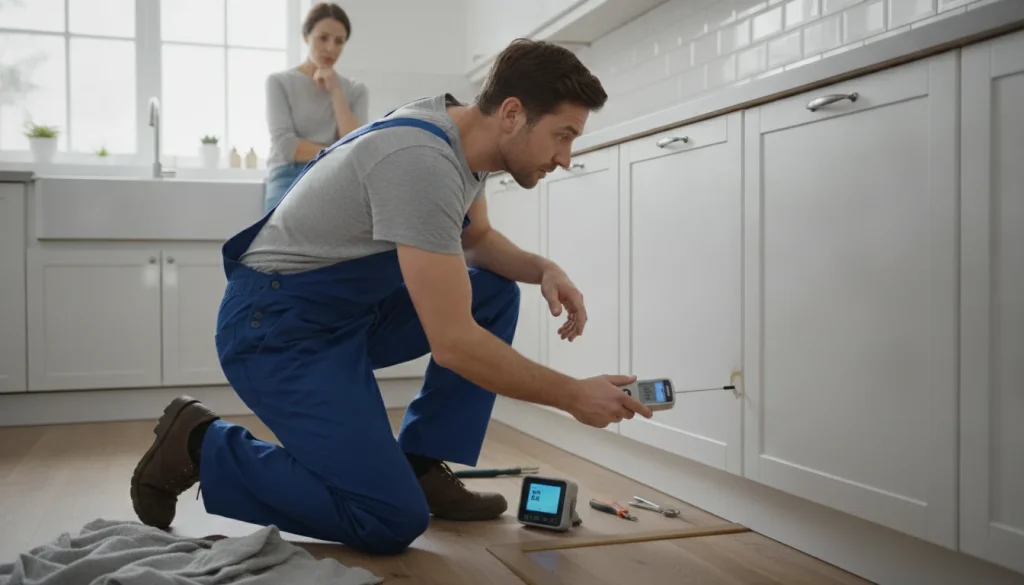
If you’re trying to decide whether you have a burst pipe or hidden leak, here’s the short answer: a burst pipe releases a large amount of water quickly with a sharp pressure drop and often audible noise, while a hidden leak seeps slowly, causes persistent damp spots, and shows mild or intermittent pressure loss. This guide explains quick checks you can do right now and how local pros in Riverside, California respond when every minute counts.
Key Takeaways
- A burst pipe produces fast flow, noise, and a sudden pressure drop; a hidden leak seeps slowly and causes gradual staining.
- Confirm issues with a 15-minute meter test and a main shutoff isolation test.
- Stay safe: shut water, cut power in wet zones, and vent damp areas to limit mold.
- Pros use acoustic listening, thermal imaging, tracer gas, and pressure tests to pinpoint leaks.
- Keep typical home water pressure around 50–60 psi with a pressure-reducing valve (PRV) and insulate exposed lines.
Overview: Burst pipe or hidden leak?
It happens fast. A hiss behind drywall. A wet patch that grows. Is it a burst pipe or hidden leak? A burst pipe is a sudden failure in the pipe wall that dumps water rapidly, drops pressure across fixtures, and may create banging or rushing sounds. A hidden leak is a small crack, pinhole, or loose joint that releases water slowly, often leaving musty odors and subtle staining.
In Riverside, California—where older homes in Wood Streets sit alongside newer builds in Orangecrest—aging copper, occasional cold snaps, and high municipal pressure can trigger both problems. Use this guide for clear signs, simple tests, and safe first steps. It also outlines how Plumbing Riverside California handles urgent calls and repairs so you can act quickly and limit damage.
Quick diagnosis: signs of a burst pipe or hidden leak
A burst pipe is a sudden rupture. Water flows fast, pressure plunges, and you may hear a rush or hammering. A hidden leak is a small, persistent escape through a crack or joint that can remain out of sight in walls, ceilings, or under slabs.
Watch how water behaves at fixtures. If faucets spit air, then slow to a trickle, system pressure is likely low from a major break. If flow seems normal but you spot damp drywall, a creeping ceiling stain, or a musty smell, that points to a small, concealed leak over time.
Look for visual patterns. A burst can flood rooms, bulge ceilings, or send water through light fixtures. A hidden leak more often blisters paint, warps trim, or leaves a ring of moisture that expands day by day.
Run two simple tests. For a water meter test, shut off all fixtures and appliances and watch the meter for 15 minutes. Any movement indicates a leak. For a shutoff isolation test, close the main valve to the home. If the meter still moves, the leak is on the supply line before the valve.
Use location and seasonal clues. Wet areas near exterior walls after a cold snap can mean a split pipe. Damp carpet along an interior wall can indicate a slab leak—an underground leak in the water lines beneath the concrete slab. Attic drips could be roof or pipe related; in hot weather, also look for pipe sweating.
Immediate steps to limit damage and stay safe
Act quickly. Small moves now can protect drywall, flooring, and wiring.
-
Shut off the main water. Turn the home’s main shutoff clockwise. If it will not turn, the street valve can be used with the right tool only if it’s safe.
-
Kill power near water. Do not use electrical devices on wet floors. Flip breakers serving soaked rooms and keep people and pets away from standing water.
-
Open a low faucet. This relieves pressure and helps drain lines, slowing some leaks until help arrives.
-
Contain and document. Move belongings. Use buckets and towels. Photograph damage and water paths for records.
-
Control moisture. If safe, run fans and a dehumidifier, pull up small rugs, and ventilate damp rooms to reduce mold risk.
-
Avoid risky fixes. Never use open flames to thaw pipes. Do not tape or glue a pressurized line. Wait until pressure is off.
-
Protect drains. If a sewer backup starts, stop running water. Using fixtures can force more waste into living spaces. Services like Toilet Repair and Sink Repair can help address fixture-related issues once the area is safe.
How pros find and fix the problem
Licensed plumbers combine specialized tools and methodical tests to pinpoint leaks quickly and minimize opening walls or slabs.
Leak detection methods
Acoustic leak detection uses sensitive microphones to listen for escaping water under floors or in walls. Thermal imaging highlights temperature differences that reveal hidden moisture. Tracer gas—an inert, lightweight gas blend—can track tiny leaks by detecting gas where it escapes to the surface.
Technicians may perform pressure testing to see whether an isolated section loses pressure. By using valves to separate runs, they can narrow the suspect area without opening every surface.
Common repair options
Repairs depend on pipe type and access. Small splits can take repair clamps. Damaged sections may be cut out and replaced with couplings or short re-pipe runs. Worn valves are swapped to improve shutoff control. If a water heater or a fixture supply line is to blame, the fix targets those parts rather than the main piping. If wastewater or vent issues surface during diagnostics, related services like Leaks & Burst Pipes, Garbage Disposal Repair, or Radiator Repairs may be scheduled separately once the immediate leak is stabilized.
Plumbing Riverside California works across Riverside, California every week on Emergency Plumbing and Leaks & Burst Pipes calls. Teams arrive stocked for common copper, PEX, and PVC repairs and can advise on prevention once lines are dry and safe.
When to call 24/7 emergency plumbing and what to expect
Call for 24/7 help when water will not stop, ceilings sag, a main line is leaking, or water is near electrical systems. Slow damp spots can sometimes wait briefly if contained, but do not delay if staining spreads or the meter continues to move.
Tell the dispatcher concise details: where water shows, when it started, floors affected, whether power is off, if the main valve is stuck, and pipe type if known. Photos help the technician plan parts and access.
On arrival, expect shutoff, rapid diagnostics, and either a stable repair or a safe temporary bypass. In the U.S., costs vary by pipe material, access difficulty, after-hours timing, and whether drywall or slab openings are required. Cleanup, structural drying, and any mold remediation add time and typically involve separate scheduling.
Prevention steps
Prevention starts as soon as repairs finish. A pressure-reducing valve (PRV)—a device that limits incoming water pressure—keeps typical home pressure near 50–60 psi. Add insulation to exposed lines, drain outdoor hose bibs before freezes, and consider smart leak sensors with auto-shutoff valves to cut future damage.
Frequently Asked Questions
### ### ### ### What should I do first if a pipe bursts at night?
Shut off the main water valve, then cut power to wet areas. Open a low faucet to relieve pressure. Move valuables and place buckets. Document damage with photos. Then call an emergency plumber for a rapid response and clear next steps.
### ### ### ### How can I tell if a leak is under the slab?
Watch for warm or damp flooring, higher water bills, and the sound of running water when fixtures are off. Do a meter test for 15 minutes. If the meter keeps moving with every fixture off, a slab leak is possible and needs professional detection.
### ### ### ### Will my water heater cause the same signs as a burst pipe?
Not usually. Water heater leaks are more often slow and pool at the base. You may see rust trails or hear hissing at the tank. A burst pipe releases water quickly and drops pressure throughout the home. Check the heater drain pan and shutoff valve first.
Key takeaways
- Fast flow with a sudden pressure drop and noise points to a burst; slow damp spots suggest a hidden leak.
- Shut water, kill power in wet zones, and ventilate to limit damage and mold risk.
- Pros use acoustic listening, thermal cameras, tracer gas, and pressure tests to locate problems accurately.
- Repairs range from clamps and couplings to targeted re-pipes and valve replacements.
- Prevent repeats with a PRV set near 50–60 psi, insulation, and smart leak detection.
Conclusion
From diagnosis to repair, Plumbing Riverside California serves homes and businesses throughout Riverside, California. If you suspect a burst pipe or hidden leak, the team is ready with rapid leak detection, Leaks & Burst Pipes expertise, and Emergency Plumbing support to protect your property and get your water system stable again. Contact us.